
Mema o Te Apārangi | Member profile: Frederique Vanholsbeeck
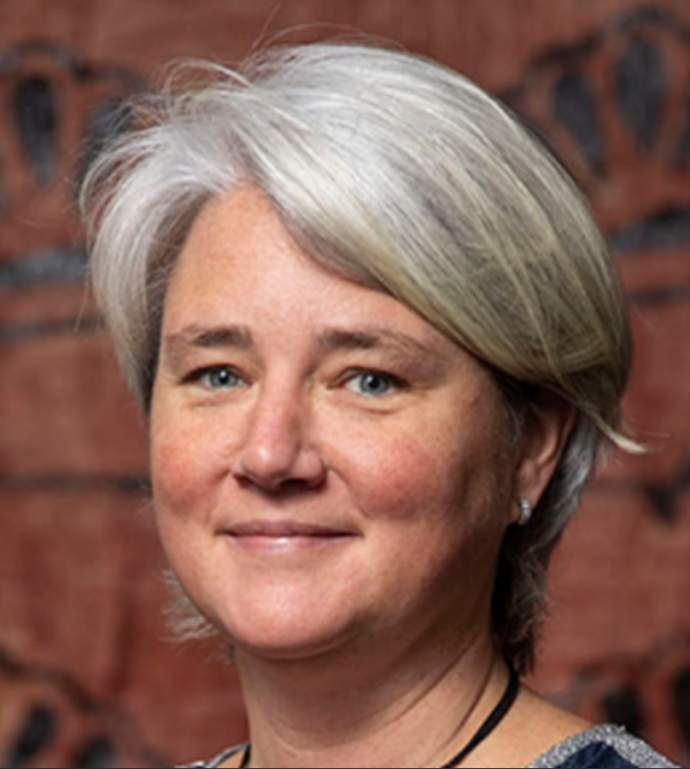
In this month’s Member profile, we hear from Frederique Vanholsbeeck, past President of the Australia and New Zealand Optical Society, one of the Society’s constituent organisations.
Tell us a bit about the organisation you are with and the work that you do.
Currently, I am both a professor of physics at the Waipapa Taumata Rau, University of Auckland, where I founded a research group in biophotonics, and the director of a National Centre of Research Excellence in photonic and quantum technologies, the Te Whai Ao — Dodd-Walls Centre for Photonic and Quantum Technologies.
As a professor, I teach and contribute to the department life and the university, a big part of my job is as the head of the biophotonics group. My main responsibilities are securing funding for the project and members of the group, making sure we deliver on these research projects, and, more importantly, supervising the research students.
Te Whai Ao — Dodd-Walls Centre's goal is to develop an inclusive, diverse, knowledgeable and dynamic research eco-system in photonic and quantum technologies known for excellent science, innovation and people development. As the director, I get to interact with industry, policymakers and a broad range of researchers. We also organise outreach events and support students.
What has your involvement been with the Society?
I have had multiple involvements with the Society, first as a recipient of a Marsden Fast-Start grant and subsequently some full Marsden Fund grants. I am a panellist for the Marsden and other funds, and a council member of the Australian and New Zealand Optical Society (ANZOS), which is a constituent member of the Society. I am also a representative to the International Committee of Optics and to the International Union of Pure and Applied Biophysics. The Society is supporting us in getting a voice internationally and getting connected nationally. The Society is supporting the science sector in Aotearoa, so it is hard not to be involved in many different ways.
What has been a defining highlight of your career?
I don't think I can pinpoint one highlight. The best part of my career is the people I have met. I have met some amazing scientists, especially women, along the way, starting with some of my high school teachers and lecturers at university. I had, and still have, some excellent colleagues and mentors to inspire and support me. Fundamentally, I love learning and trying to make the world a better place. I have been lucky enough to work with people who were passionate about both their work and diversity and inclusion.
My work is interdisciplinary as I design and build imaging systems for biologists, engineers, physiologists, and even art conservators. I am constantly learning new things about what my collaborators study.
My highlights are the people, getting them together and making the science sector a better place for everyone, which the Society is great at.
What do you love about science?
I love to learn and to get to understand things, hence my love for science. I am an applied scientist, so I really enjoy building things that work and help us understand processes such as cartilage degeneration and the onset of osteoarthritis (a Marsden-funded project). I chose science because it gives me an opportunity to solve problems.
When not working, I enjoy...
Gardening, travelling, going on hikes, knitting and crocheting.