
Mema o Te Apārangi | Member profile: Honourable Margaret Austin CNZM CRSNZ
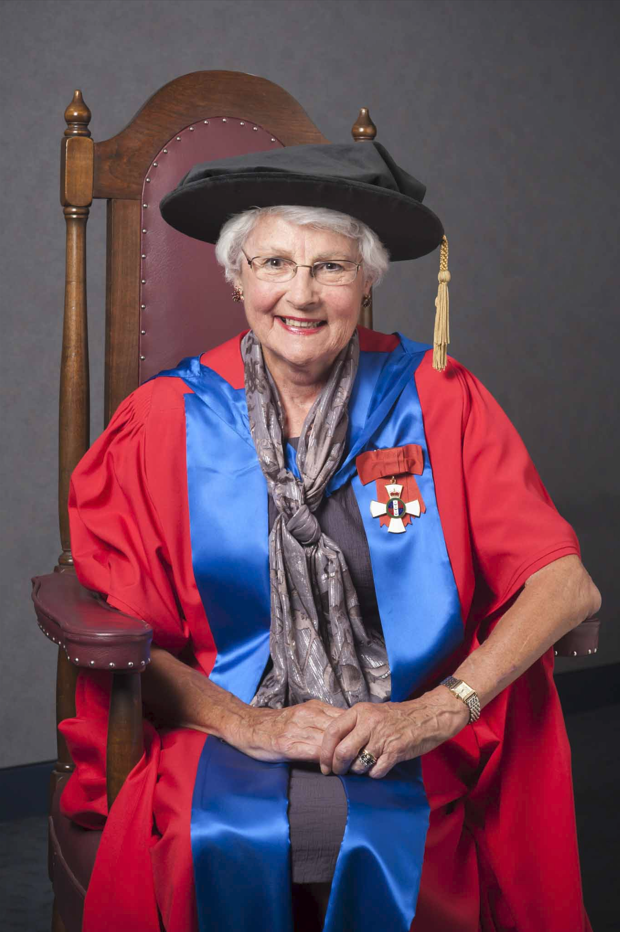
In this month’s Member profile, we hear from the Honourable Margaret Austin CNZM CRSNZ, a Companion of the Royal Society Te Apārangi.
Tell us about the work you have been involved with during your career
As far back as I can remember, I was guided by inspired teachers who challenged us as students. It was the end of WWII, and they instilled into us the importance of learning to live together in harmony, taking care of our personal relationships and cherishing family life. There was also an expectation that we would contribute to the community. I have tried to live positively by the mantra of "teams, time and relationships"– teams of people working together no matter the activity, taking time to achieve positive, considered outcomes and, in doing so, cultivating good working relationships. Then an important mentor declared: "never go to bed at night without acknowledging a good deed of someone in your team". My gratitude to these people knows no bounds, and similarly to my parents, who, despite poverty and sickness, always accepted and supported my progression from school to university. I do not hesitate to reveal that I rebelled against the expectation of the 1950s that women’s place was in the home. Then, the learned Professor of Zoology reminded us that he accepted "we would be the mothers of the next generation, but do not forget I am educating you to contribute to this country".
There was never any doubt about my choice of pursuing the natural sciences. I had been captured early on. Similarly, I never thought of any alternative to teaching as my vocation. It was the natural pathway for me, and it has provided numerous opportunities and immense satisfaction including the award of D.Sc (honoris causa) from both Lincoln University and the University of Canterbury.
Family life took precedence in the early 1960s to ensure that all three [of my children] had the opportunity to explore their interests and to be responsible for their decisions. That they have had successful professional careers has given us as parents enormous satisfaction.
Engaging in contributing to writing new science and biology prescriptions at the secondary level was both demanding and energising and led to a Teaching Fellowship at the University of Canterbury in 1970, charged with developing a Laboratory Manual to accompany the Form 7 (year 13) Biology prescription. The curriculum work led to being the co-founder of the New Zealand Science Teachers Association in 1974 and the Founder of the Canterbury Branch of the New Zealand Education Administration Society in 1978. Later, in 1980, I was awarded the Commonwealth Fellowship. It allowed me to spend a year at the Institute of Education in London. My thesis was devoted to the structure of the school curriculum and the importance of initiating young people into the “realms of knowledge” that cannot be left to chance.
Christchurch is a place of great opportunity for involvement in the community and for me it has included establishing the Osteoporosis Society, involvement in Reproductive Medicine, Pegasus Health Community Board, the Arts Centre, Rutherford’s Den, Science Alive, the Civic Music Council, the Christchurch Symphony Orchestra, International Antarctic Centre, the Chris Ruth Centre for profoundly disabled adults, the Aranui Wainoni Community Centre post-earthquake and the hugely successful Aoraki Mackenzie Dark Sky Reserve. I have been privileged to be awarded the MNZM in 1997 and the CNZM in 2008.
What has your involvement been with the Society?
My involvement with the Society goes back to the 1970s when it was important to be informed about activities and events in the city that could be drawn to the attention of teachers and senior students. I am aware there are numerous young people introduced in this way to the Canterbury Branch of the Society, the Botanical Society and the Ecological Society, who became members or followed up their interests with tertiary studies. I was honoured to be awarded the Silver Medal for Services to Science in 1994 by the Society and to be made a Companion in 2003. I was elected to the Council in 2006 and became Vice-President with responsibility for Science and Technology Education in 2008. Engaging in this way has allowed me to both contribute and to call on a background of experience and governance which has been very rewarding.
What have been the highlights of your career?
I cannot confine myself to a single highlight, and have already referred to engaging in curriculum development, the 1970 Teaching Fellowship and the Commonwealth Fellowship 1980-81.
Secondly, as a Member of Parliament from 1984–96, contributing to policy debate leading to informed decisions for all citizens and eventually becoming Minister of Research, Science and Technology, Internal Affairs and Arts, and Culture in the 4th Labour Government was a huge privilege.
Thirdly, post Parliament, I led teams to report on several Ministerial projects and was appointed to Chair the NZ National Commission for UNESCO in 1999. This gave me the opportunity to represent New Zealand at Asia and the Pacific regional meetings and to lead the team at the Biennial General Conference. Subsequently, I was invited by the Director General, Mr Kōichirō Matsuura, to be his Consultant in the Asia Pacific Region from 2006–2010.
In conclusion…
Science is multifaceted and open-ended, capturing and maintaining my interest with opportunities for family and community involvement, opening many, many doors along the way. I can honestly say, "in the twilight of my life, I am thankful for the New Zealand education I received and the opportunities I have had, which opened doors for me all over the world, and I am content".