
Digby Macdonald
(1943-2025)
Hon FRSNZ
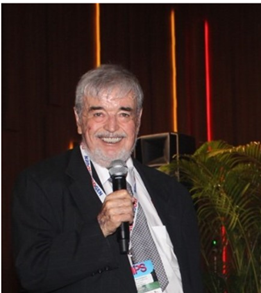
Digby D. Macdonald, a pioneering scientist in corrosion and electrochemistry, passed away in June 11th, 2025 at the age of 81.
Born December 7, 1943, in Thames, New Zealand, to Leslie Graham and Francis Helena (Verry) Macdonald. Digby earned his bachelor’s and master’s degrees at the University of Auckland, then completed a Ph.D. in Chemistry at the University of Calgary, Canada.
He was remembered for his groundbreaking research, mentorship, and distinguished academic career across several leading universities. Remembered not only for his scientific achievements but also for his mentorship of students and colleagues worldwide. His work continues to influence nuclear engineering, materials science, and corrosion research. His contributions remain foundational in the field of corrosion science, and his passing is a significant loss to the global scientific community. Tributes emphasize that his mentorship and kindness extended beyond his professional circle into his family life, where he was remembered as a devoted husband, father, grandfather, and brother.
He was married to Mirna Urquidi-Macdonald. Mirna was Digby’s longtime partner and spouse, supporting him through his distinguished academic career in corrosion science and electrochemistry.
Awards:
1983: Research Award, College of Engineering, Ohio State University.
1985: Selector of the Kuwait Prize for Applied Sciences.
1991: The Carl Wagner Memorial Award from The Electrochemical Society.
1992: The Willis Rodney Whitney Award from The National Association of Corrosion Engineers.
1992: Chair, Gordon Research Conference on Corrosion, New Hampshire.
1993: W.B. Lewis Memorial Lecture by Atomic Energy of Canada, Ltd., “in recognition of [his] contributions to the development of nuclear power in the service of mankind”.
1993 W.B. Lewis Memorial Lecture award from Atomic Energy of Canada, Ltd.
1994: Elected Fellow, NACE-International.
1993-1997: Member, USAF Scientific Advisory Board, Protocol Rank: DE-4 (Lieutenant General equivalent).
1995: Elected Fellow, The Electrochemical Society.
1996: Elected Fellow, Royal Society of Canada. (“National Academy” of Canada).
1996: Wilson Research Award, College of Earth and Minerals Sciences, Pennsylvania State University.
1997: Elected Fellow, Royal Society of New Zealand. (“National Academy” of New Zealand).
2001: H. H. Uhlig Award, Electrochemical Society.
2003: U. R. Evans Award, British Corrosion Institute; Elected Fellow, Institute of Corrosion (UK); Appointed Adjunct Professor, Massey University, New Zealand; Appointed Adjunct Professor, University of Nevada at Reno.
2004: Elected Fellow, World Innovation Foundation.
2005: Elected Fellow, ASM International.
2006: Elected Fellow, International Society of Electrochemistry.
2007: Khwarizmi International Award Laureate in Fundamental Science.
2007-2010 Trustee, ASM International.
2010: Appointed Chair Professor, King Fahd University of Petroleum and Minerals, Dhahran, Saudi Arabia.
2010: Recipient, Lee Hsun Research Award, Chinese Academy of Sciences, China.
2011: Inducted Doctuer Honoris Causa by INSA-Lyon, Lyon, France.
2011: Nominated for the Nobel Prize in Chemistry.
2012: Awarded the Faraday Memorial Trust Gold Medal.
2013: Awarded the Gibbs Award in Thermodynamics by IAPWS.
2014: Awarded the Frumkin Memorial Medal in Fundamental Electrochemistry by the International Society of Electrochemistry.
2015: Olin Palladium Award for Distinguished Contributions to the Field of Electrochemical or Corrosion Science.
And many more distinctions and awards.
Positions:
- Senior Research Associate, Alberta Research Ltd/University of Calgary, Canada.
Lecturer in Chemistry, Victoria University of Wellington, New Zealand. - Laboratory Director, Deputy Director, and Vice President of Stanford Research Institute (SRI), Menlo Park, CA.
- Professor and Director of the Fontana Corrosion Center at Ohio State University, in Columbus, Ohio.
- Distinguished Professor of Materials Science and Engineering; Director of the Center for Electrochemical Science and Technology. Held leadership positions, including Director of the Center for Advanced Materials and Chair of the Metals Program at Penn State University, at University Park, PA.
- Professor-in-Residence in Materials Science and Nuclear Engineering at UC Berkeley from 2012 until his passing, at Berkeley, CA.
Corrosion Science: Globally recognized for his theoretical and experimental work in electrochemistry.
- Point Defect Model: Developed this influential theory explaining the behavior of passive oxide films, especially in nuclear environments.
- Redox Control: He developed the concept of redox control (oxidation-reduction potential control) to adjust water chemistry in the primary coolant systems of various water-cooled nuclear reactors. This control keeps the corrosion potential of materials low, preventing severe corrosion and the release of radioactive corrosion products.
- Radioactive "CRUD" Removal: Early in his career, his work on redox control was applied at the Douglas Point CANDU reactor to remove accumulated radioactive deposits from boilers, addressing high radiation levels.
- Modeling Radiolysis: Macdonald and his team developed models to simulate the radiochemistry and corrosion properties in reactor coolant systems, considering electrochemical factors and the effect of radiolytic yields on ECP. This modeling helps predict and manage transient species and their impact on corrosion in nuclear settings, including future fusion reactors.
- Predictive Models: His research integrated mathematical modeling with practical engineering to improve nuclear reactor safety by understanding the interactions between radiation, water chemistry, and material corrosion.
- Many contributions to the nuclear Industry, including developing the understanding of developing methods to predict and control the buildup of radioactivity, specifically by managing corrosion potential (ECP-water chemistry) in the primary coolant circuits; prediction of life of nuclear reactors and metals exposed to harsh environments by understanding the role and prediction of accumulated damage, and much more.
- A deep understanding of primary and secondary batteries, and much more.
Publications: Authored more than 1,000 peer-reviewed papers, four books, and many book chapters.
Digby D. Macdonald’s life was marked by curiosity, dedication, hard work, and a relentless pursuit of knowledge. His memory lives on not only in the scientific breakthroughs he achieved but also in the inspiration he gave to generations of researchers.
He is missed by his wife, four children, five grandchildren, two sisters, one brother, and their respective families: colleagues, ex-graduate students, friends, and the electrochemistry and corrosion Industries and Societies.
By Dr. Mirna Urquidi-Macdonald