
Jesse Rumball-Smith
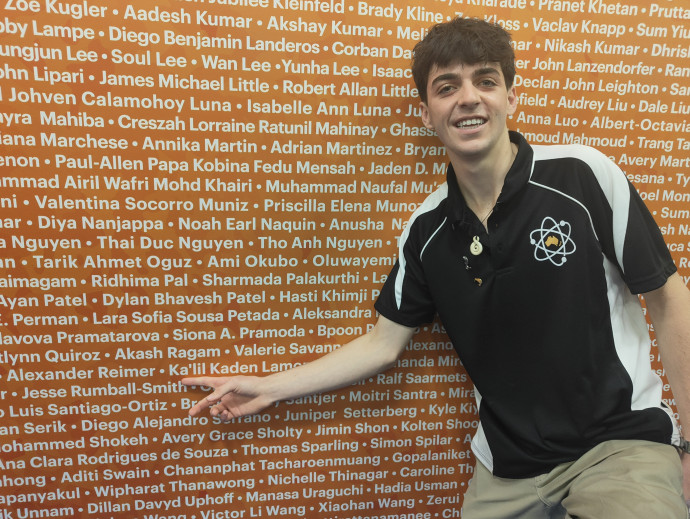
Jesse, a year 13 student at Wellington College, has had two science projects judged to represent Aotearoa New Zealand at the International Science and Engineering Fair (ISEF).
In 2025, he placed 1st in the Behavioral and Social Sciences category for his road safety app, winning USD $6,000 + USD $1,000 for his school and his fair.
In 2026, Jesse explored an innovative idea to develop New Zealand wool into a textile that can passively capture carbon dioxide. His project, Wool that Breathes, involved growing porous crystalline microstructures on the wool to capture the CO2, with the goal of demonstrating a clear pathway and proof of concept for passive carbon-capturing textiles. The potential of this technology would be to not only reduce emissions, but also lift the value of New Zealand wool.
His 2025 project, Building A Better Backseat Driver, uses the ubiquitous smartphone in tandem with psychologically backed behavioural interventions to improve road safety. New cars increasingly include advanced safety features, but these remain out of reach for most of the fleet. The app Jesse has developed offers a solution and reduces the growing inequity which he says, “effectively limits safety to only the richest in our society.”
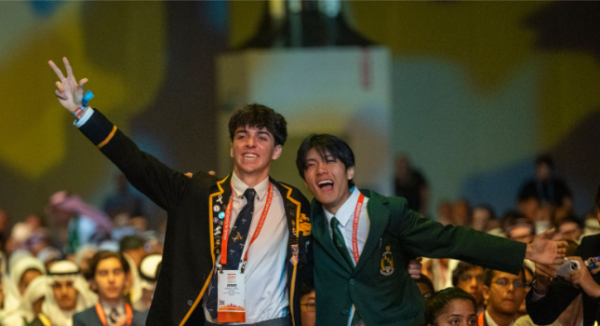
Credit: Chris Ayers Photography/Society for Science
What did your experience at ISEF mean to you as a rangatahi from Aotearoa?
Representing Aotearoa at ISEF was a huge honour. It meant a lot to stand alongside students from around the world and show that rangatahi from New Zealand can contribute meaningfully to global science and innovation. It was also humbling, because it made me realise how much talent, curiosity, and drive exists internationally, while also making me feel proud of the perspective we bring from Aotearoa.
Did you learn or experience something unexpected at ISEF?
Something I didn’t expect was how much of the value of ISEF came from everything around the judging, not just the judging itself. Judging is only one day, but ISEF is a whole week.
Some of my favourite parts were walking around the halls, seeing everyone’s projects, meeting people from all over the world, and just being inspired by what other students my age are working on. It made the whole experience feel much bigger than just competing or trying to win an award.