
Sophie Ineson
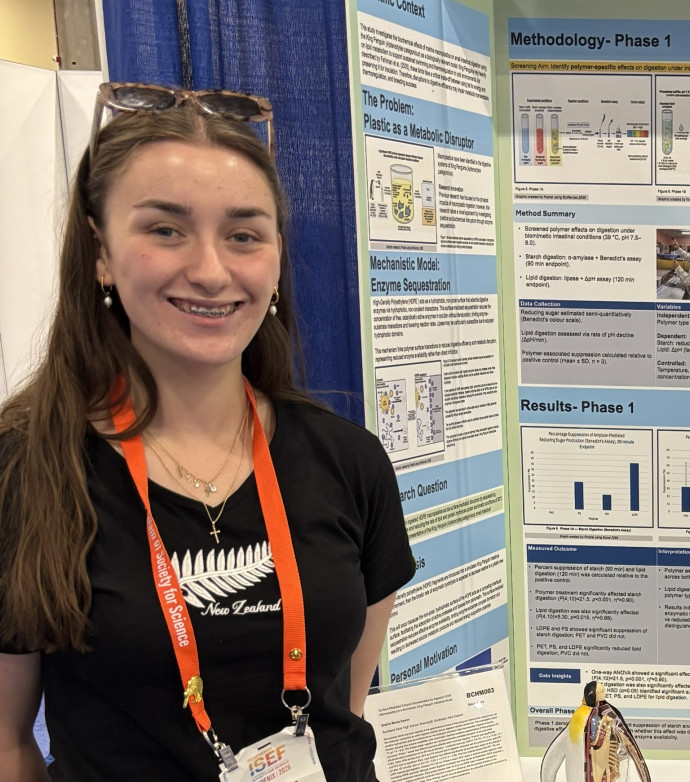
Sophie, a year 12 student at Southland Girls’ High School, was nominated for the national competition by the New Zealand Aluminium Southland Science Fair. She won a place at the International Science and Engineering Fair (ISEF) 2026, held in Phoenix, Arizona, United States of America.
Sophie's project investigated the hidden biochemical effects of microplastics on the digestive health of Antarctica’s iconic seabirds. Sophie’s project, Disrupted Digestion, compared the effects of different microplastics on digestive enzymes, such as the enzymes that break down starch and fats. She tested this by simulating the conditions in the small intestines of king penguins.
What did your experience at ISEF mean to you as a rangatahi from Aotearoa?
As a student from Southland, I never imagined that the science fair projects I began in primary school would one day lead me to the world's largest pre-college science competition.
I hope that by sharing my journey, other students can see that opportunities in science are not reserved for a select few. They begin with curiosity, hard work, and the courage to say yes to new challenges.
While I was proud of my research and the recognition it received, the most important outcome for me was the possibility that my journey might inspire someone else's. If sharing my experience encourages even one student to enter a science fair, pursue a question they are passionate about, or believe that they belong in STEM, that would mean more to me than any science award.
Can you describe your experience?
Before the competition began, we visited the Grand Canyon. Our guide asked us all to line up facing away from the view and then turn around together. Seeing the Grand Canyon for the first time was breathtaking but sharing that moment with students from the Australian and New Zealand teams made it even more special. It was an early reminder that ISEF is about much more than science.
The science fair itself was held at the Phoenix Convention Centre. We checked in, set up our display boards, and prepared for the opening ceremony.
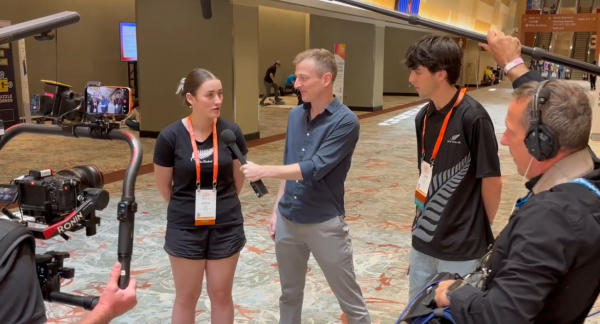
Jesse and I were interviewed by the ISEF media team, and our interview was shown during the opening ceremony, which was an exciting and unexpected experience—especially knowing that my science teachers, family, and supporters back at Southland Girls' High School were watching from New Zealand.
One of the most enjoyable events was when students exchanged pins representing their countries. While the pins themselves were special keepsakes, the real value was in the conversations they started. The event created connections from the very beginning of the week, allowing students to learn about different cultures, share their stories, and form friendships that continued throughout the competition. It was incredible how quickly science became a common language!
The opening ceremony was unforgettable and on a huge stage. Each country was introduced with a video before students walked onto the stage carrying their national sign. It was one of those moments where the world felt a little smaller and a lot more hopeful.
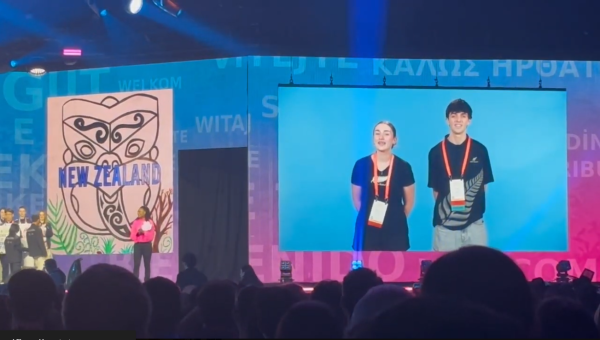
Thousands of students from different cultures had come together to celebrate innovation, creativity, perseverance, and learning. Standing amongst them, I felt incredibly proud to represent both New Zealand and the values of Aotearoa on a global stage.
The following day involved presentation practice, media visits, and guest speaker sessions on topics including the future of artificial intelligence. We also attended a social evening hosted by the University of Arizona, and I had my first ride in a Waymo self-driving car.
Judging day was intense but rewarding. At the end of the day, students were applauded out of the exhibition hall by parents, supporters, judges, and team members.
Jesse and I linked arms with our Australian teammates as we walked out together, which was a proud and emotional moment. I felt incredibly grateful to everyone who had supported me throughout the journey and helped me reach that point. We carried the support of so many people from home with us.
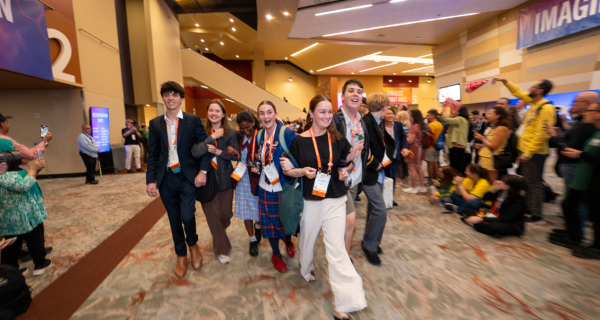
Post-judging with the AUSSEF team. Photo credit: Society for Science
Did you learn or experience something unexpected at ISEF?
One of the most valuable and unexpected aspects of ISEF was the opportunity to hear presentations from world leading innovators and researchers. While I expected to learn about cutting-edge science, I was surprised by how much emphasis speakers placed on qualities such as empathy, collaboration, leadership, and lifelong learning.
At the opening ceremony, Barbara Barrett, the 25th United States Secretary of the Air Force and a key figure in establishing the U.S. Space Force, encouraged us to continue pursuing ambitious goals, mentor younger learners, and "dare to do great things." Her message resonated strongly with me because it highlighted that success is not only measured by personal achievement, but also by the impact we have on others and the opportunities we create for future generations.
Another speaker, Michael Crow, President of Arizona State University, spoke about addressing complex global challenges through collaboration and emphasised the importance of adaptability, empathy, and leaving arrogance at the door.
What surprised me was his focus on understanding people as well as scientific problems. That the world's most pressing challenges cannot be solved by scientific knowledge alone; they require creativity, communication, and the ability to work with diverse perspectives.
Another significant highlight was meeting scientists and professionals from Regeneron, the event sponsor and supporter of my biochemistry category. I discussed my research with leaders working at the forefront of biotechnology and medical innovation. Having experts genuinely interested in my project and engaging with my ideas was both surreal and incredibly motivating!
These experiences broadened my understanding of what it means to be a scientist.
I left ISEF with a greater appreciation that innovation is not just about technical expertise, but also about curiosity, empathy, and a willingness to learn from others.
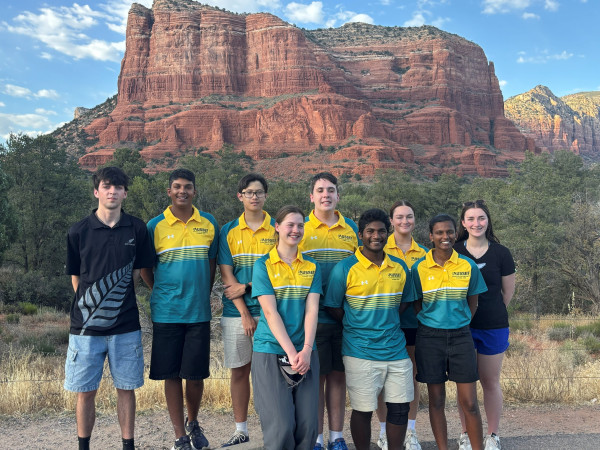
AUSSEF and NZ teams in Arizona.
Any final thoughts?
My experience at ISEF meant a great deal on many levels. The United Nations Sustainable Development Goals, particularly Goal 5: Gender Equality, have always been important to me, especially in the context of science and creating opportunities for young people to see themselves in STEM fields.
More than anything, ISEF reminded me that science is not only about discovery and innovation, but also about people, connections, and the collective effort to solve challenges that affect our world.
This journey also showed me that opportunities often begin with passion, curiosity, and the courage to take the first step. For me, that journey started years ago with science badges and then entering the science fair in Year 6.
Over time, each experience helped me apply past knowledge to new situations, ask better questions, and stay curious about what is happening in the world.
I am especially grateful to the Royal Society Te Apārangi and Amanda Hood for their unwavering commitment to making ISEF a once-in-a-lifetime experience and helping us be at our best. Their support, encouragement, and belief in us made the experience even more meaningful, and these relationships and lessons are something I will continue to value long after the competition itself.
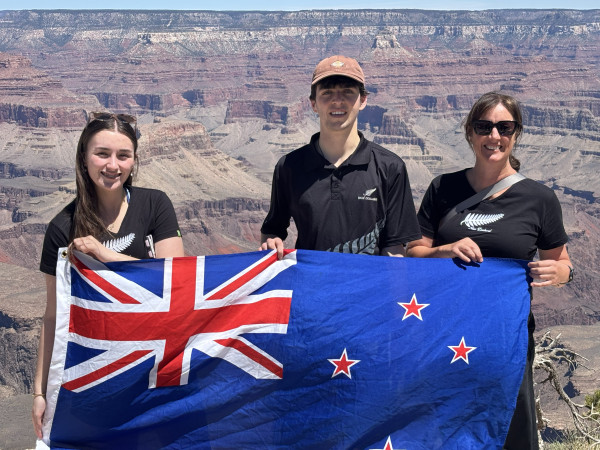
Sophie Ineson, Jesse Rumball-Smith and science teacher Amanda Hood