
Expert perspective: Professor Suresh Muthukumaraswamyy
Psychopharmacologist Professor Suresh Muthukumaraswamy recommends collection of real-world data, including on cost-effectiveness to inform decisions about funding mechanisms for psychedelic treatments.
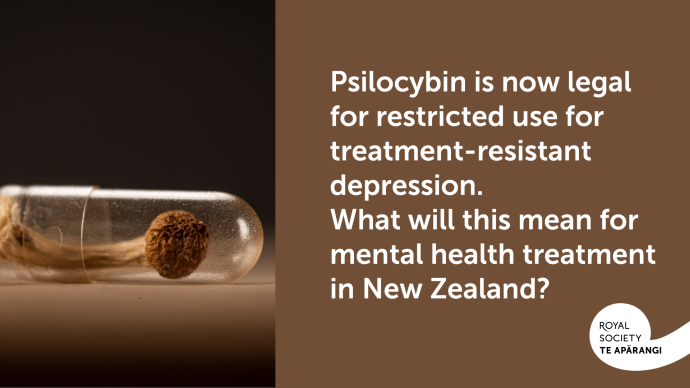
What people need to keep in mind is that psilocybin is a treatment for those who have very treatment-resistant depression. This is not a first-line treatment; it's for a particular set of patients who are very unwell and have not benefited from other treatments – often at least two classes of anti-depressants along with psychotherapy.
With there being only one approval for a psychiatrist to prescribe psilocybin in place now, it doesn't mean very much, because there is limited capacity for treatment use. Going forward, more will be applying in the next year or two.
Psilocybin for treatment-resistant depression and MDMA for post-traumatic stress disorder, both have robust evidence bases, so we should focus on implementing these applications first.
We know that MDMA for post-traumatic stress disorder is quite advanced and is already approved in Australia for clinical use. Therefore, we can expect MDMA to be another option that isn't too far away from being approved as a medical treatment in New Zealand.
We still have catching up to do just to get up to speed with Australia.
What I'd like to see is providers being able to administer psilocybin and collect real-world data to see how well it works, how safe it is, how effective it is, and which patients benefit from it. We'd then be able to say, systematically as a healthcare system, whether it is worth continuing with.
We can't yet say how much impact this will have because of its accessibility issues. Treatment will be expensive, costing $10,000 at an absolute minimum. Will it be self-funded, insurance-funded, publicly funded, or funded through some other payment system?
There could be large cost-savings to the public from treatments like this. If we have people who have severe mental illness who can't work, who are on the insurance system or funded by ACC, and are costing a lot in healthcare, then in terms of cost-effectiveness, it's a good proposition, as well as simply improving people's health and quality of life.
Think about how much we spend on a cancer drug to buy someone 6 months of life; we spend hundreds of thousands of dollars without blinking. We are not averse as a health system to spending large amounts of money on interventions, but as soon as it's about mental health, people get a bit nervous about it.
It's important to mention that the key to this treatment's success is the talk therapy provided after taking the psilocybin, so people trying to self-treat because of financial barriers will be unlikely to be successful and could go off the rails in the wrong setting.
It’s not well justified that many of these psychoactive substances should be Class A. Classifications are supposed to be based on the risk of harm, but the risk of harm from psilocybin and LSD is not as high as that of many other Class A substances. They are less harmful and less addictive than cannabis.
The non-addictive nature of psychedelics is important because it means that people won't necessarily want to keep coming back to clinic sessions to continue taking them.
Published December 2025
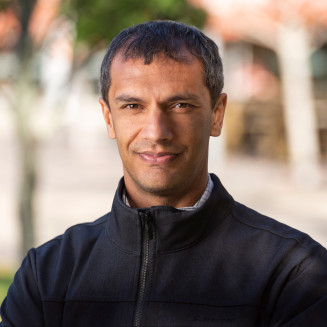 Professor Suresh Muthukumaraswamy works on psychopharmacology at Waipapa Taumata Rau – the University of Auckland, and has been studying psychedelics including psilocybin, LSD, DMT, and ketamine for nearly 15 years. Following his PhD in psychology at the University of Auckland, he joined the then newly established Brain Research Imaging Centre at Cardiff University as a postdoctoral Fellow. In 2014, Suresh received a Rutherford Discovery Fellowship to work on ’High-frequency brain activity in health and disease’.
RELATED CONTENT
Professor Muthukumaraswamy also commented on the Expert Reaction put together by the Science Media Centre: Prescription psilocybin and over-the-counter melatonin – Expert Reaction