
Expert perspective: Associate Professor Richard Egan and Dr Chris Arnison
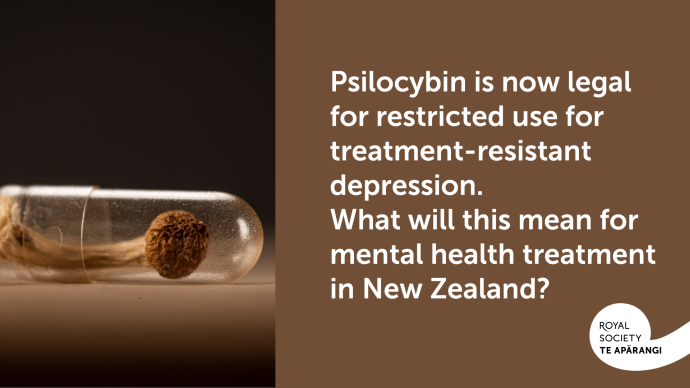
Associate Professor Richard Egan and Dr Chris Arnison call for ethical integration of spirituality into psychedelic therapy frameworks.
The resurgence of psychedelic-assisted therapy marks a profound shift in mental health care – one that invites us to reconsider the role of spirituality in healing. Spiritual care is now taught in medical and nursing schools in Aotearoa, and students learn about wairua and spirituality from Year 1 in state schools via Te Whare Tapa Whā as developed by Sir Mason Durie ONZ KNZM FRANZCP FRSNZ.
The therapeutic power of psychedelics stems not only from their pharmacological effects but also from their ability to facilitate deeply spiritual experiences and promote healing. These experiences – often ineffable and transformative – are central to their efficacy and must be ethically and equitably integrated into psychedelic treatment models.
Spirituality can be defined as “the aspect of humanity that refers to the way individuals seek and express meaning and purpose and the way they experience their connectedness to the moment, to self, to others, to nature, and to the significant or sacred.” This definition spans the secular-to-religious continuum and is particularly relevant in psychedelic therapy, where experiences of meaning and connection are significantly associated with positive therapeutic outcomes.
In Māori and other holistic health models, taha wairua (spiritual health) is interconnected with taha hinengaro (mental health), taha tinana (physical health), and taha whānau (social health). Psychedelic therapy has the potential to align with these models, especially when rooted in Indigenous knowledge systems like Te Whare Tapa Whā and Te Wheke. However, it is crucial to avoid the appropriation of Indigenous knowledge. The Tū Wairua project exemplifies ethical engagement by centring Māori leadership and sovereignty in psychedelic research.
The evidence base is compelling. A meta-analysis of 13 clinical trials found that psilocybin consistently produced robust antidepressant effects, with pooled remission rates of 45% compared to 22% for control groups. Another meta-analysis of nine clinical trials found psychedelic-assisted therapy produced large reductions in depression, anxiety, and PTSD symptoms, with minimal adverse effects and strong overall efficacy. Importantly, these outcomes are often mediated by the spiritual or mystical quality of the experience, measured using tools like the Mystical Experience Questionnaire (MEQ-30).
The need for a shift in the approach to care which integrates spirituality is particularly urgent since conventional systems are failing to address mental health challenges for many.
As psychedelic therapies gain legitimacy, they also give further licence to self-treatment outside clinical settings, often by people who have exhausted conventional treatments for their mental health. This trend underscores the need for culturally safe, clinically supported pathways to be developed in Aotearoa New Zealand. It also necessitates a proactive harm-minimisation approach – well established in other drug contexts – by government, health promotion, and public health sectors. Providing accessible knowledge, safety protocols, and culturally appropriate guidance will be essential.
The numinous – experience of awe, unity, and transcendence – has long been the domain of mystics. Psychedelics reliably occasion such states, which many participants describe as life-changing and spiritually affirming. These experiences are not without risk. Psychedelic journeys can also deepen spiritual confusion or distress. Thus, the therapeutic environment – often framed in terms of ‘set and setting’ – is critical. Cultural safety, spiritual guidance, and community support must be embedded in practice.
Spirituality is already part of mental health care – implicitly through meaning-making and existential reflection, and at times explicitly through spiritual assessment and chaplaincy. Psychedelic therapy offers a rare opportunity to restore the “heart and soul” of mental health care through integrative, spiritually informed care.
Published December 2025
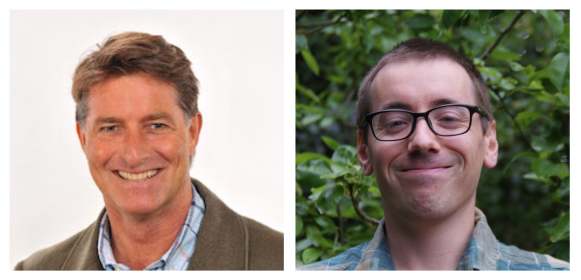
Left to right: Associate Professor Richard Egan and Dr Chris Arnison
Associate Professor Richard Egan co-directs the Social and Behavioural Research Unit in the Department of Public Health, at the Dunedin School of Medicine. Richard's research focuses on spirituality, health, end-of-life care, supportive care in cancer, and assisted dying.
Dr Chris Arnison has a BA in Religion from Ōtākou Whakaihu Waka – the University of Otago, where his recent PhD explored self-medication with psychedelic substances in Aotearoa New Zealand. His broader research interests span the intersections of spirituality, health, and wellbeing.