
Céline Cattoën-Gilbert
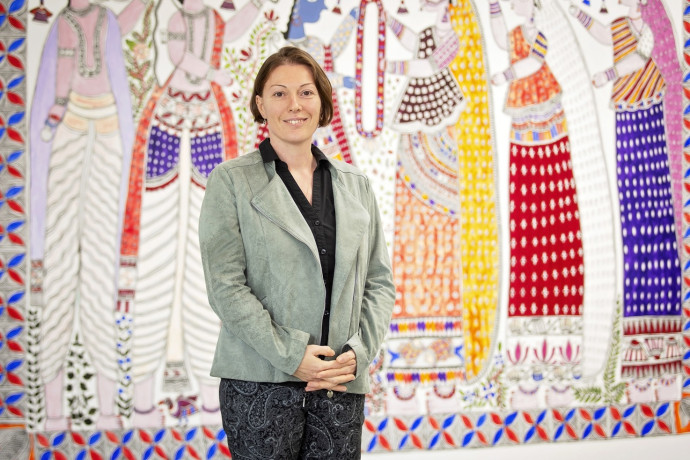
2025: Dr Céline Cattoën-Gilbert of Earth Sciences New Zealand will improve preparedness for extreme flood events
Floods are Aotearoa New Zealand’s most frequent and costly hazard, and are worsened by climate change and deforestation. Cyclone Gabrielle exposed critical gaps in how we forecast floods, communicate warnings, and support those most affected.
Dr Céline Cattoën-Gilbert has been awarded a Mana Tūānuku Research Leader Fellowship to develop new integrative models to forecast floods and work with at-risk communities to improve their responses to flooding. The aim is to combine weather, hydrological, and sea-level forecasting data – enhanced by machine learning – to develop and test models that are more accurate and generalisable, and work with hapū to co-develop a framework, informed by mātauranga Māori, to forecast and mitigate the risk of floods. This research is designed to improve how Aotearoa prepares for and responds to extreme floods, and to protect people, taonga resources, and whenua land, while upholding tino rangatiratanga (self-determination) for Māori communities.
Dr Céline Cattoën-Gilbert is a hydrological forecasting scientist at Earth Sciences New Zealand and a Principal Investigator at Te Pūnaha Matatini. After a PhD in Mathematics from Te Herenga Waka – Victoria University of Wellington, Céline began work at the National Institute of Water and Atmospheric Research that has been recognised by a NIWA Research Excellence Award and two Science New Zealand team awards. Céline has also received several major research grants for research already delivering significant benefits, including through the Aotearoa Flood Awareness System.
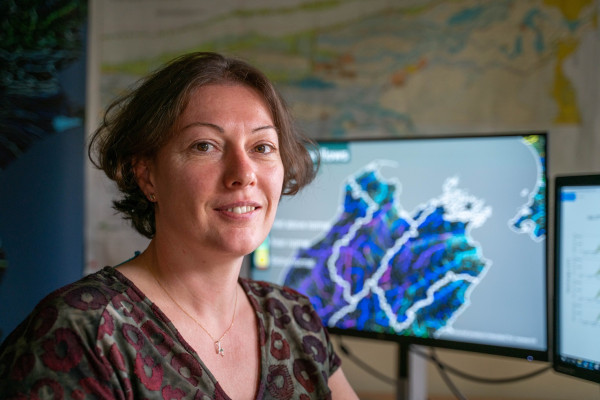
Dr Céline Cattoën-Gilbert in front of an video output of the Aotearoa Flood Awareness System on the screen (photo credit: Stuart McKay, ESNZ)