
Suliasi Vunibola

2025: Dr Suliasi Vunibola of Te Whare Wānaka o Aoraki – Lincoln University will use traditional ecological knowledge from Pacific food systems to improve health, cultural, and environmental outcomes for Pacific communities in Aotearoa New Zealand
New Zealanders face a preventable health crisis, which is costing the country’s healthcare system billions of dollars. Non-communicable diseases, such as diabetes and cardiovascular disease, are preventable through dietary interventions. Pacific peoples living in Aotearoa experience disproportionately high rates of such diseases. Traditionally, Pacific diets were rich in fruits and vegetables, but increasingly, these food sources have been replaced by mass-produced and ultra-processed foods. Health strategies that aim to change the behaviour of individuals have largely failed.
Dr Suliasi Vunibola (Fiji – Vanua o Naduru) has been awarded a Mana Tūānuku Research Leader Fellowship to explore how contemporary Pacific communities make use of traditional food production practises, and to use this knowledge to co-develop and pilot a culturally grounded, community-led and sustainable food production system. The aim is to demonstrate how Indigenous practices for food production can catalyse systemic change that could benefit community health, dignity and resilience in Aotearoa and beyond.
Dr Suliasi Vunibola is a Senior Lecturer in the Department of Environmental Management at Te Whare Wānaka o Aoraki — Lincoln University, with a PhD from Te Kuenga ki Pūrehuroa — Massey University. Suliasi is an Advisory Board member and visiting Fellow for the Macmillan Brown Centre for Pacific Studies, at Te Whare Wānanga o Waitaha — the University of Canterbury, and Pacific Research Co-Lead at Bioprotection Aotearoa. Suliasi advises on projects across the Pacific, and is also the Co-Founder of the Niuvaka Trust in Palmerston North, dedicated to supporting families in need.
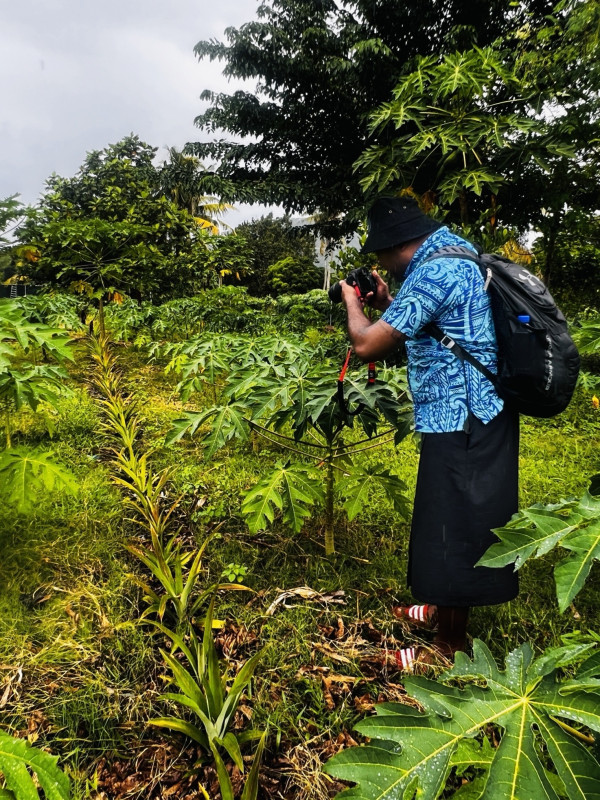
Dr Suliasi Vunibola conducting Bioprotection Aotearoa research in Samoa (photo supplied)