
Ang McGaughran

2025: Dr Ang McGaughran of Te Whare Wānanga o Waikato – the University of Waikato will investigate how we can better predict the invasive potential of pest species
Invasive species are a growing threat to ecosystems worldwide, and in particular to the historically isolated ecosystems of Aotearoa New Zealand. Despite decades of research, it remains difficult to predict whether a pest will be able to establish in a new environment (its invasive potential) and how far it will spread if it does establish (its invasiveness).
Dr Ang McGaughran has been awarded a Mana Tūānuku Research Leader Fellowship to address this gap in our knowledge by studying how differences in the genomes of blowfly species affect invasiveness traits, using cutting-edge approaches in ecological, genomic, and behavioural research, alongside machine learning and other computational analyses. By determining what it takes to be a successful invader, this research could help to develop earlier and more targeted interventions to protect the natural taonga flora and fauna of Aotearoa. The Fellowship will support the develop of critical capability in New Zealand’s biosecurity response to invasive pests that can cause significant environmental and agricultural damage.
Dr Ang McGaughran is a Senior Lecturer and the Director of the Invasomics Lab at Te Whare Wānanga o Waikato – the University of Waikato. After a PhD in Molecular Biosciences from Te Kunenga ki Pūrehuroa – Massey University, Ang completed several international postdoctoral positions, including a Humboldt Research Fellowship in Germany and a Discovery Early Career Researcher Award Fellowship from the Australian Research Council, before returning to Aotearoa. Ang has won major research grants (including from the Endeavour and Marsden Funds), and served on the Ecology, Evolution and Behaviour Panel for the Marsden Fund.
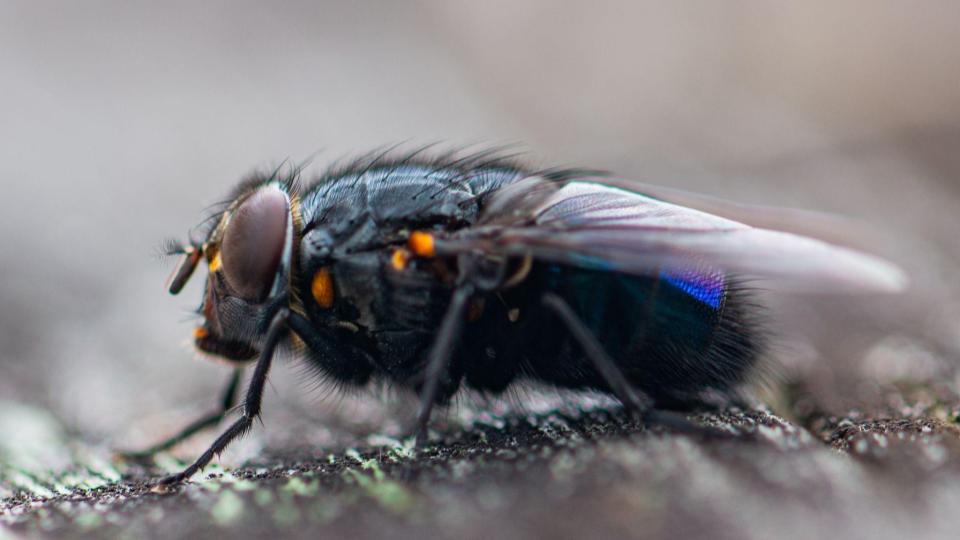
The endemic blowfly Calliphora quadrimaculata (photo credit: Nathan Butterworth)