
Te unu a te moana i te hauhā i Aotearoa | Marine carbon dioxide removal in Aotearoa New Zealand
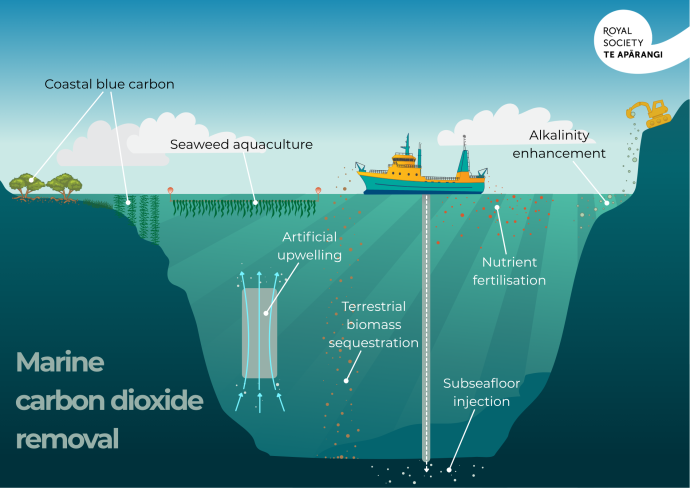
We capture carbon on land for climate change mitigation: what about in the ocean?
Aotearoa New Zealand is increasingly being affected by climate change, a consequence of rising average global temperatures due to human-caused increases in carbon dioxide (CO2) and other greenhouse gases in the atmosphere. To mitigate the extremes of climate change, Aotearoa New Zealand is part of a global effort to reduce the rate of greenhouse gas emissions (largely CO2) into the atmosphere. Globally, and in Aotearoa New Zealand, there is also increasing focus on taking action to remove greenhouse gases already in the atmosphere.
There are many international agreements and initiatives designed to reduce emissions, but strategies for removal are less well-developed. Most initiatives have focused on terrestrial carbon storage, such as planting more forests to remove CO2 from the atmosphere or underground storage of CO2. However, there has been less focus on the potential of the ocean to capture and store CO2.
While oceans naturally absorb up to 30% of the CO2 emissions caused by human activities, there is interest in human-driven methods to increase this uptake. These methods are termed marine Carbon Dioxide Removal (mCDR).
mCDR encompasses a range of techniques, from biological methods involving seaweed cultivation, adding nutrients, and marine ecosystem recovery, to physical or chemical approaches, such as altering ocean alkalinity. mCDR techniques are still under development, with research and small-scale trials happening around the world to determine if they successfully remove and store meaningful amounts of CO2 and what impacts they may have on complex ocean systems. It is important to note, though, that CO2 removal cannot substitute for emissions reductions; it will never be sufficient on its own to address climate change.
It is also not yet clear if mCDR techniques would be feasible in Aotearoa New Zealand; each has unique social, environmental, and economic impacts that need to be understood if they are to become part of our future climate change mitigation strategies.
With this publication, the Royal Society Te Apārangi aims to help people better understand marine carbon dioxide removal techniques, their relevance to New Zealand’s unique environment, and the issues associated with these approaches – so communities can make informed decisions about the future of our oceans.
View report:
View flipbook: Marine carbon dioxide removal in Aotearoa New Zealand.
Download report:
Marine carbon dioxide removal in Aotearoa New Zealand
Diagrams of marine carbon dioxide removal techniques:
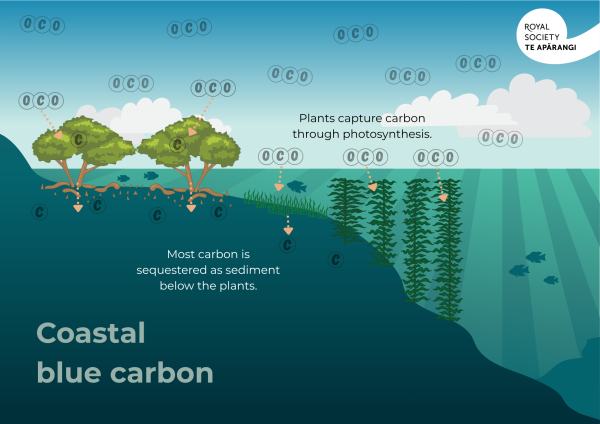
Coastal blue carbon: increasing the carbon stored in coastal environments.
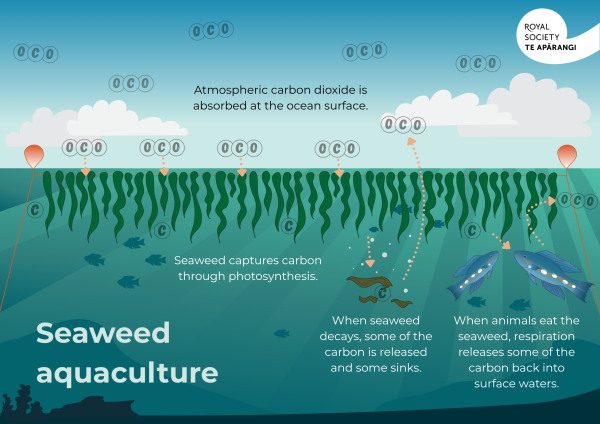
Seaweed aquaculture: sequestering carbon into seaweed.
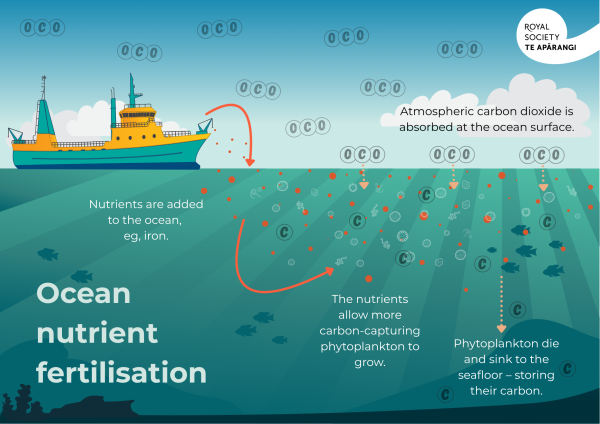
Ocean nutrient fertilisation: encouraging the growth of phytoplankton to sequester carbon.
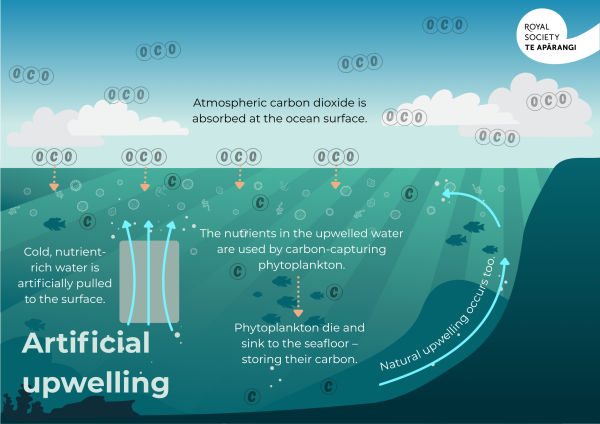
Artificial upwelling: bringing nutrient-rich waters to the ocean surface to encourage the growth of phytoplankton to sequester carbon.
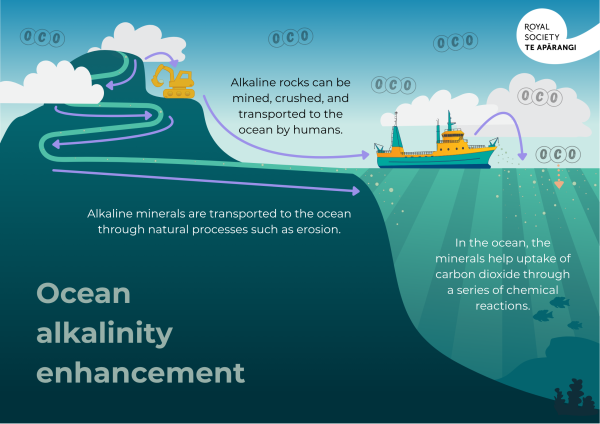
Ocean alkalinity enhancement: altering the chemistry of the ocean to increase its ability to take up carbon dioxide from the atmosphere.
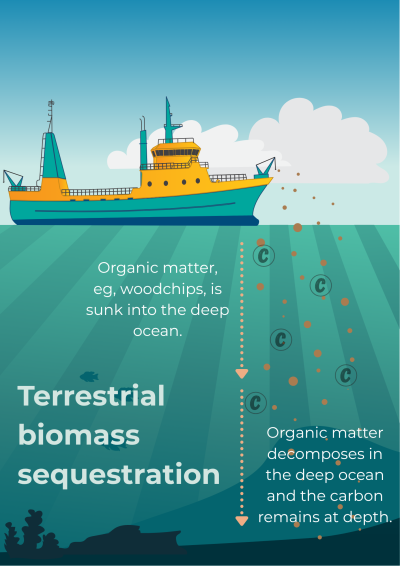
Terrestrial biomass sequestration: sinking organic matter to store carbon in the deep ocean.
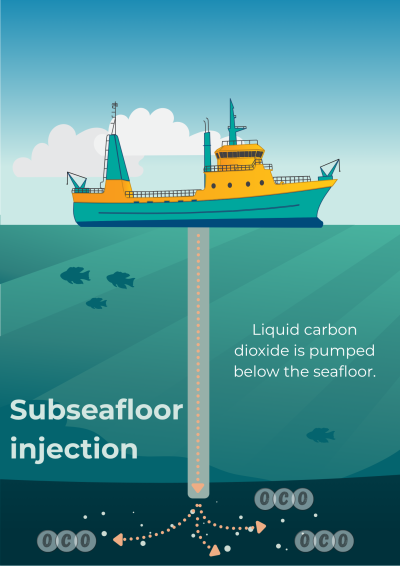
Subseafloor injection: pumping liquid carbon dioxide below the seafloor for carbon storage.
Published 26 August 2026