
News
Published 21 January 2026ANZCCART NZ responds to New Zealand's animal research statistics for 2024
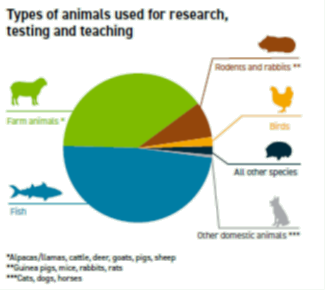
The Australian and New Zealand Council for the Care of Animals in Research and Teaching (ANZCCART) New Zealand has released commentary on the latest statistics about the use of animals in research, testing and teaching in Aotearoa New Zealand.
New Zealand’s Ministry for Primary Industries (MPI) released the 2024 statistics about the use of animals in research, testing and teaching on 12 December 2025.
View the full annual statistics report: 2024 Statistics on the Use of Animals in Research, Testing and Teaching in New Zealand.
Context: The report is based on data from 128 NZ organisations (22 are Holders of an MPI-approved Code of Ethical Conduct and 106 use the Animal Ethics Committee of one of the Code Holders). It should be noted that projects that run over more than one year do not report animal use annually but only at the end of the project or at the end of 3 years, whichever comes first.
ANZCCART welcomes the continued transparency demonstrated through the publication of these annual statistics and provides its annual commentary. Public reporting plays a critical role in maintaining trust in the research, testing and teaching (RTT) system and provides an evidence base for ongoing discussion about how animals are used, how their welfare is protected, and how the sector continues to improve.
Animals used: The 2024 report shows that 602,318 animals were used in RTT activities during the year primarily by Universities (65%), Commercial organisations (16%) and Crown Research Institutes (10%). In 2024 the most commonly used animals were fish and farm animals reflecting the importance of agriculture, aquaculture, environmental management and species conservation research in Aotearoa New Zealand.
The report also highlights that much of the year‑to‑year variation in animal numbers is linked to the reporting cycle for large, long‑term research programmes, underscoring the importance of considering trends over multiple years rather than single annual figures. The 3-year rolling average accommodates, to some extent, year-to-year variation and for the 2022-2024 period animal use was 437,677. However, both the annual number and the 3-year rolling average are considerably higher than those for the last 20 years (both numbers averaging about 275,000) which MPI attributes to the fact that several large multi-year projects were part of the 2024 data.
On top of the 602,318 animals used in RTT, a further 139,686 animals (mainly mice, fish and rats) were bred but not in the end used for RTT and subsequently killed. This compares with 110,565 in 2023, 134,845 in 2022 and 178,569 in 2021. Although there are good reasons for some ‘extra’ animals (e.g., litter size is unpredictable, project may only need one sex, need ‘sentinel’ animals for health screening, need excess animals to sustain an animal colony or maintain a genetically altered line), the bred-but-not-used numbers caused by altered projects should be kept to a minimum.
Purpose of use: Of the 602,318 animals, 44,161 (7%) were killed entirely for use of their tissues in RTT, for some animals this may have been following other manipulations, while for other animals they may have been killed entirely for the use of their bodies/tissues. The rank order of RTT purpose varies each year and for 2024 was species conservation (34%), veterinary research (27%), animal husbandry (11%), basic biological research (11%), teaching (9%), medical research (3.5%) and environmental management (2.5%). Use of animals for Testing of products, as usual, was very small (less than 1%). Very few animals (82) were used to develop or validate alternatives to replace use of animals in the future, probably reflecting the lack of funding for such research.
Impact on animals: ANZCCART notes with interest the data on the impact of RTT on animals. The report indicates that for 2024, 51% of animals experienced manipulations graded as having no/virtually no or little impact on their welfare (compared with an average of 79% since the year 2000), 47% experienced moderate impact (compared with an average of 16%) with fewer than 2% experiencing high or very high impact (compared with an average of 6%). The marked reduction in the proportion of animals experiencing high or very high impact compared with 2023 is encouraging and either demonstrates the ongoing efforts of researchers, animal ethics committees and institutions to minimise harm or reflects the unusually high 17% of 2023. It would be very valuable if MPI could revert to separating out in the main text of the report the “no/virtually no impact” from the “little impact” as the former primarily covers observation of animals with no accompanying manipulation or intervention. An appendix reveals 24% of animals in 2024 were in the “no/virtually no” and 27% in the “little” impact category.
Post-use outcomes: The report also provides valuable insight into outcomes for 2024 for animals following use: 492,075 of the 602,318 (81%) remained alive after manipulations and were returned to owners (35%), retained by institutions (4%), released to the wild (if the animals’ normal environment) (40%), or rehomed, that is adopted into a home environment (0.02%) or sold/disposed of through commercial slaughterhouses or (2%). ANZCCART notes that it is disappointing that only 144 animals were rehomed compared with 444 in 2023 and 599 in 2022 but recognises that opportunities for rehoming vary considerably by species and research context.
The 3Rs principles: ANZCCART strongly supports the emphasis placed in the report on the 3Rs principles of Replacement, Reduction and Refinement. The inclusion of such voluntary information, which commenced in 2022, on how organisations are implementing the 3Rs, and on new techniques introduced during 2024, has been a positive development. However, ANZCCART notes that less organisations are volunteering existing or new examples compared with the last 2 years. These examples, when provided, demonstrate tangible progress in areas such as the use of teaching aids, improved experimental design, non‑ or less‑invasive techniques, enrichment, and staff training, all of which contribute to better animal welfare outcomes.
Concluding remarks: "Continuous improvement in the care and use of animals in research depends on openness, good governance and a strong culture of ethical responsibility,” said ANZCCART. “The MPI statistics show that New Zealand’s regulatory framework, centred on animal ethics committees and codes of ethical conduct, continues to support both high‑quality science and a strong commitment to animal welfare.”
ANZCCART encourages researchers, institutions, regulators and the wider community to engage with the findings of the 2024 report. Informed discussion, grounded in accurate data, is essential to ensuring that the use of animals in research, testing and teaching remains justified, carefully managed, and continuously improved.
ANZCCART remains committed to promoting best practice, supporting education and dialogue, and advancing the 3Rs across Australia and New Zealand.
For further information
Please contact ANZCCART (NZ): anzccart@royalsociety.org.nz