
News
Published 4 December 2025Toi Te Mana wins Apollo Award
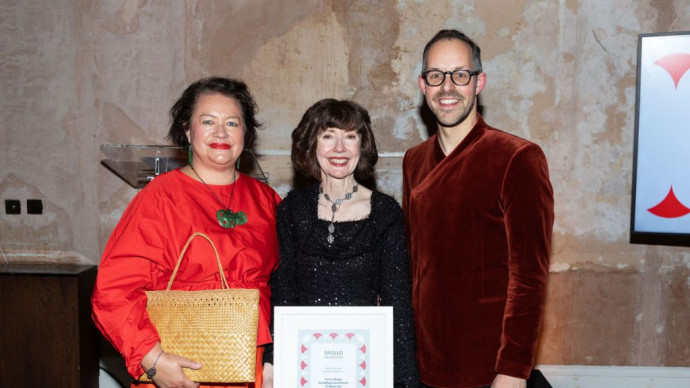
Toi Te Mana, a groundbreaking book on Māori art, has won the internationally prestigious Apollo Award for 2025 Best Book of the Year.
Based in London, the Apollo Awards are hosted annually to celebrate internationally exceptional achievements in the art and museum worlds. The Book of the Year Award commends the finest new art publications of the past 12 months.
Toi Te Mana is a six-hundred-page comprehensive survey of Māori art, from Polynesian voyaging waka to contemporary Māori artists, which also features more than 500 illustrations and images.
Published in New Zealand by Auckland University Press in 2024 and overseas by the University of Chicago Press, it is the first New Zealand book to be recognised in the awards, and the first winner focused entirely on Indigenous art.
Professor Deidre Brown FRSNZ (Ngāpuhi, Ngāti Kahu) says the idea for Toi Te Mana came when she was working at the University of Auckland with Professor Ngarino Ellis (Ngāpuhi, Ngāti Porou) and Jonathan Mane Wheoki CNZM (Ngāpuhi, Te Aupōuri, Ngāti Kurī).
“We all have backgrounds in Māori art history. Over coffee one day in 2011, we started talking about how we had each been approached by different publishers about writing comprehensive books on Māori art history – from Polynesian settlement to the present day – but were intimidated by the enormity of the task.”
“Naturally, that led to us discussing whether we could collaborate on a book like this, and we quickly decided that a Marsden Fund (Humanities) grant would be an ideal catalyst for this project.”
Deidre says the project took “12 solid years of work for me and Ngarino because of the breadth of Māori arts and the depth we wanted to convey”.
“Jonathan became unwell in the first year of the project and passed away in 2014. He was able to partially complete a chapter, on Māori modernism, which I finished using extracts from other texts he had written about the subject.”
“We spent a year developing a kaupapa Māori methodology for the project, which was published as 'Does Māori Art History Matter?' (Victoria University, 2014), and the chapter and textbox list.”
“The book is over 200,000 words long (it was the largest and heaviest book produced in Aotearoa in 2024), and, at that size, chapter production and revision takes a long time and involves many revisions. In parallel to that process, was a four-year project involving us and two staff at Auckland University Press obtaining archival/photographer and community permissions for each of the 500 images.”
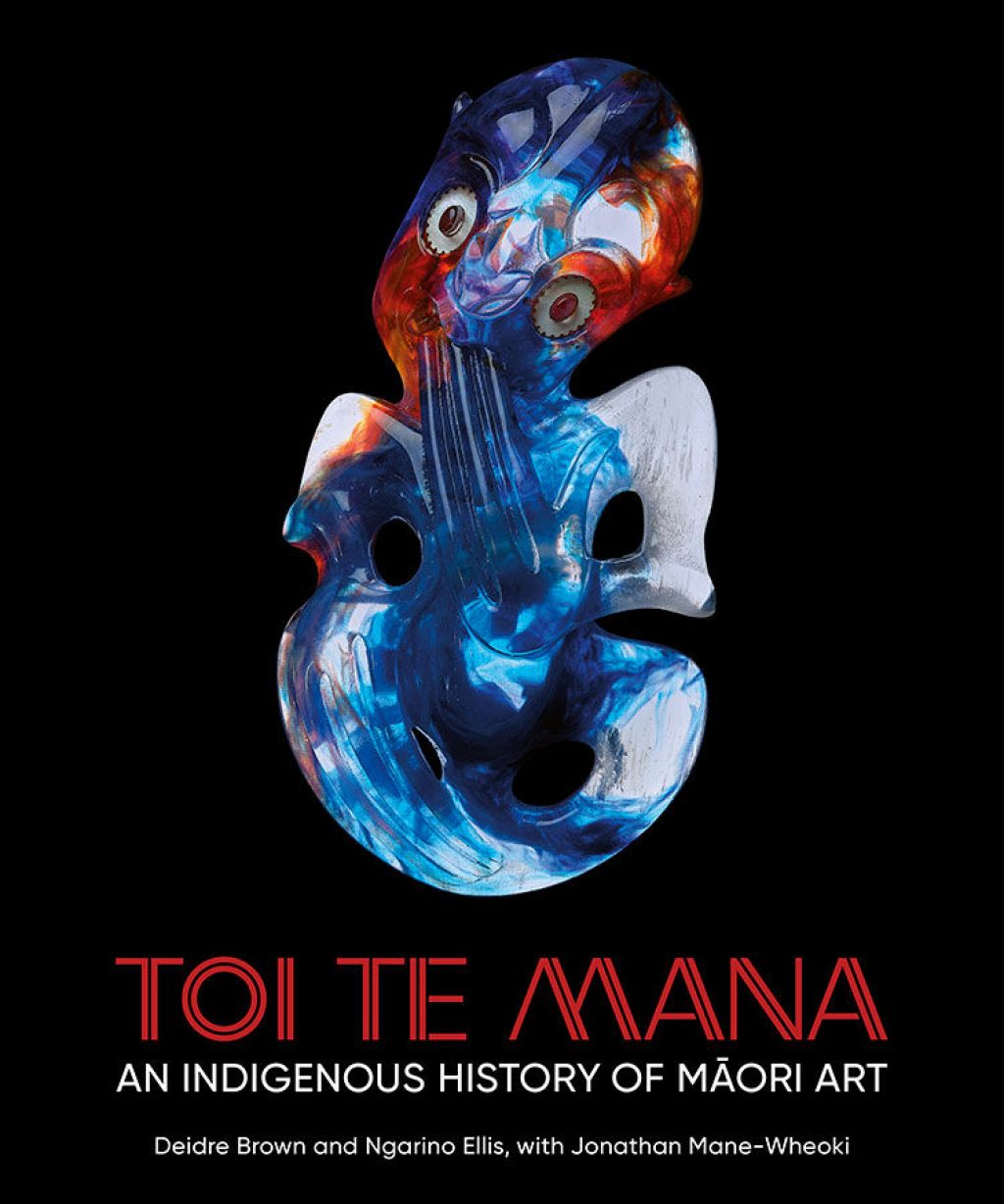
Deidre says Toi Te Mana is the “culmination of a life’s work for us” and represents nearly a century of work in the discipline between the authors.
“We have been clear that this is not the last word on Māori art and Māori art history, so that there is space for others to present their stories of Māori art in the future."
“We also wanted the book to be the resource that Ngarino and I had wished we had when we were students of art history and architecture, respectively.”
She says Māori art is a critical aspect of Māori culture alongside te reo and other cultural practices, and the knowledge and practice of Māori arts are critical to our future.
Deidre says Marsden funding enabled them the time to develop their method of working and begin the deep dive into their research, which included visiting many museums, art gallery collections and artists in Aotearoa and around the world.
Reflecting on winning the award, Deidre says she and Ngarino were very surprised to hear from their publishers that they had won the award – news they had to keep confidential for a few weeks before the ceremony.
“We were shortlisted with books about the great European masters and genres by authors we admire. One objective of our book was to situate Māori art as one of the great art traditions of the world, and we were touched that the citation said that we had achieved this."
“Our book is co-published internationally by University of Chicago Press, which is a highly regarded scholarly publisher (particularly in the arts), and the Apollo review editor had seen our title on their publication list and requested a copy, which was then considered for the competition.”
Deidre says their managers kindly agreed for her and Ngarino to travel to UK for the awards ceremony, at short notice, which was a glittering event in central London attended by gallery and museum directors and curators, and collectors and sponsors, from the UK, Europe and North America.
“We received a lot of moral support from the NZ High Commission, Ngāti Rānana and the UK Friends of the University of Auckland in the short time we were in London.”
About the Apollo Award
The Apollo awards are administered by London-based magazine Apollo, which was founded 1925 and is published monthly.
Apollo is one of the world’s oldest and most respected magazines on the visual arts, covering everything from antiquities to contemporary work.
It also provides in-depth discussion of the latest art news and debates, exclusive interviews with the world’s greatest collectors and artists, expert information on the market, authoritative guidance on collecting, and reviews and previews of exhibitions worldwide.
The Apollo Awards celebrate exceptional achievements across seven categories: Exhibition, Book, Museum Opening, Acquisition, Personality, Artist and Digital Innovation.
Winners and shortlisted candidates are nominated by Apollo’s editorial advisory panel.