
Alistair Gunn
(1958–2026)
MB ChB Otago PhD Auck FRSNZ
(15 December 1958–10 May 2026)
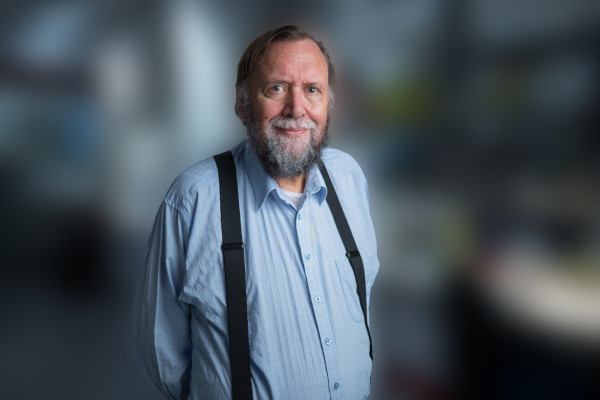
The Royal Society Te Apārangi mourns the sudden passing of Professor Alistair Gunn FRSNZ, a world-renowned expert in perinatal neuroscience who developed a treatment which has saved and improved the lives of countless babies.
Professor Gunn, who died on 10 May 2026 at the age of 67, leaves an extraordinary legacy. He was the driving force behind the development of therapeutic hypothermia – brain cooling – for newborn babies who are deprived of oxygen at birth. His mother, the late Professor Tania Gunn, had begun work on therapeutic brain cooling. Together they established that cooling could minimise brain injury in sheep.
Professor Gunn began his clinical research in the 1990s, with a trial at National Women's Hospital in Auckland, before collaborating to trial brain cooling in babies at a much larger scale. The simplicity, safety, and effectiveness of the resulting treatment have led to worldwide adoption, and it is now the standard of care for babies who are oxygen deprived at birth.
Professor Gunn became a Fellow of the Society in 2009. He authored more than 800 scientific publications, served as a paediatrician at Starship Children's Hospital, and co-directed the University of Auckland's Fetal Physiology and Neuroscience Group. His contributions were recognised with numerous honours, including the MacDiarmid Medal (in 2014), the Health Research Council's Beaven Medal (in 2017), the NZ Association of Scientists' Shorland Medal (jointly, in 2017), and the Howard Williams Medal from the Royal Australasian College of Physicians (in 2024). Professor Gunn was also recently made an Honorary Fellow of the Newborn Brain Society.
One of his long-time collaborators, Associate Professor Joanne Davidson, says “Alistair was a great inspiration to his colleagues and to all the students and emerging researchers who he mentored over the years. He was always generous with sharing his extensive knowledge and wisdom, along with his stash of lollies. Alistair will not only be remembered for his vast scientific achievements but also for his warm, humble manner and his good humour. Alistair will be greatly missed.”
The President of the Royal Society Te Apārangi, Distinguished Professor Dame Jane Harding DNZM FRSNZ FRACP, said: "Alistair Gunn embodied both intellectual rigour and compassion. His commitment to translating fundamental research into real-world care changed the outcome for millions of newborns and their families. New Zealand has lost an outstanding scientist.”
The Society extends condolences to Professor Gunn's wife, Dr Diana Raybone, to his four children and their families, and to his many collaborators.