
News
Published 26 February 2026Fusion technology reaches key milestone with Kiwi innovation
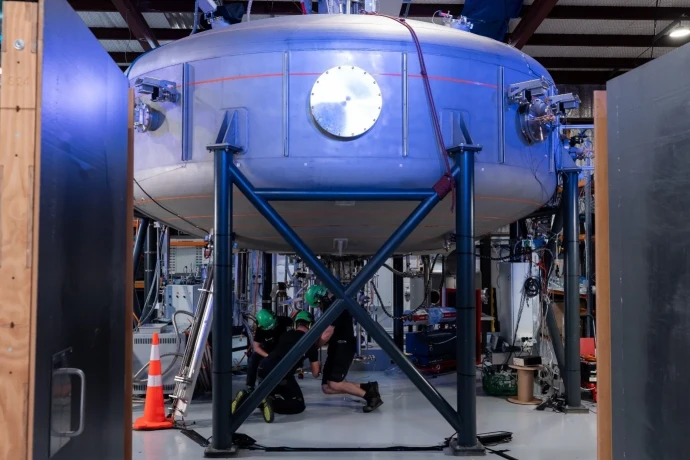
OpenStar Technologies Ltd, a pioneering start-up based in Wellington, moved closer to the dream of sustainable clean energy generation last week
On Tuesday 17 February, a half-tonne magnet was levitated in a 5.2m-wide vacuum chamber filled with gas heated to over a million degrees Celsius. With guests including the Prime Minister Rt Hon Christopher Luxon watching, plasma was generated in two showcase demonstrations. It was also livestreamed worldwide.
While the machine is not yet producing more energy than it consumes – a key challenge for fusion – the successful generation of plasma demonstrates the viability of OpenStar's design. The initial prototype, ‘Junior’, cost in the region of NZ$10 million and serves as a proof of concept for larger-scale applications.
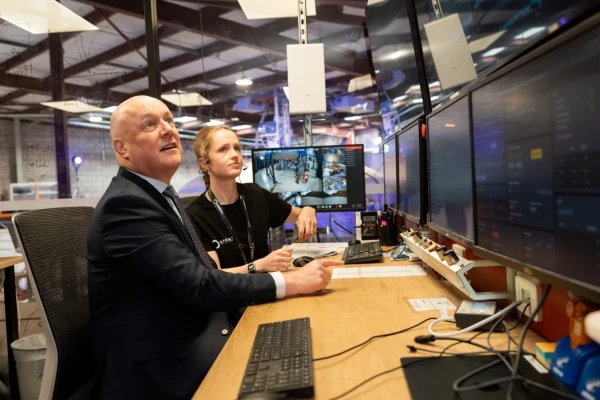
Prime Minister Rt Hon Christopher Luxon and OpenStar physicist Eleanor Chambers initiating the plasma sequence during the demonstration.
OpenStar is competing with approximately 50 firms around the world that are vying to achieve cost-effective fusion energy. OpenStar differs from other companies in its use of a levitated dipole reactor and the innovative power-supply solutions it has developed.
The foundations were laid by institutions such as MIT, Columbia University, and Tokyo University, but much of the key technology was developed at the Robinson Research Institute and start-ups just down the road from OpenStar’s Wellington facility.
High-temperature superconductors can carry more current or higher critical current densities than other superconductors, enabling OpenStar’s approach to power recirculation, magnet charging, and cooling systems.
New Zealand has become a world leader in high-temperature superconductors, thanks to teams led by Jeff Tallon FRSNZ, Bob Buckley, Rod Badcock FRSNZ, and Shen Chong among others, and to sustained investment via the Marsden Fund.
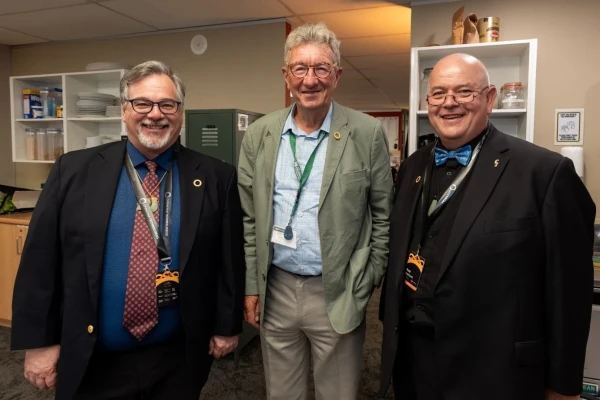
L-R: OpenStar Chief Science Officer, Darren Garnier, with Jeff Tallon FRSNZ and OpenStar Chief Technology Officer, Rod Badcock FRSNZ.
What makes last week’s plasma demonstration so exciting is the realisation of this technology working at scale. Not only could this mark a milestone in the global race to turn fusion from theory into an effective power source, but it could fast-track applications of high-temperature superconductors in motors and electric power-distribution systems. These solutions could enable step-change increases in the power-density and efficiency of electric machines, such as high-speed trains and electric aircraft.
Speaking at the event, OpenStar Founder and Chief Executive, Ratu Mataira, said "what you’ve seen today is an economic necessity, not a science project.” Looking forward, he said that the facility isn’t just about plasma, but about creating high-value careers that allow our people to succeed and compete on the world stage without leaving home.
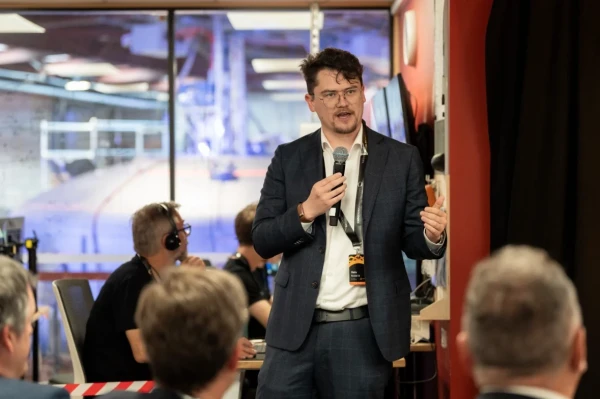
Ratu Mataira speaking at the event
“This is how we move from being a country that exports people, to a country that exports technology. Ensuring that we develop the sovereign capability that allows us to participate in a globally competitive marketplace.”