
News
Published 17 June 2026Academy research awards 2026
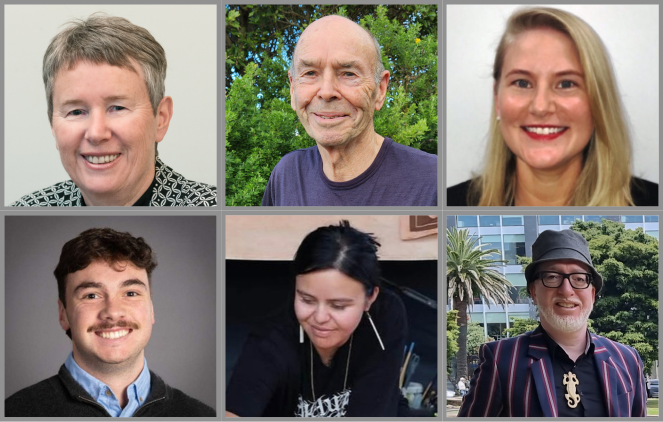
The Academy has selected recipients for the 2026 Charles Fleming Senior Scientist Award, the Charles Fleming Publishing Award, the Hutton Fund grant, and the Skinner Fund grant.
The annual Charles Fleming Senior Scientist Award is a research grant worth up to $10,000 to support the research of a senior scientist and their research group.
Awarded to Professor Pauline Norris, from Va’a o Tautai | the Centre for Pacific Health, at the University of Otago, Ōtākou Whakaihu Waka, to support travel to the University of Turku, Finland, to collaborate with colleagues on a European Research Council funding application for a project titled 'Keep calm and take your meds? – Pharmaceuticalisation of Precarity'.

"Many people around the world are feeling that life is increasingly precarious because of economic, political, and environmental changes. One response to these feelings is to take medicines for anxiety and stress. Our project will look at the use of these medicines as a response to social vulnerability: how it is experienced by individuals, professionals, and the public; when it is beneficial or harmful to individuals and societies; and what alternatives exist."
The annual Charles Fleming Publishing Award (worth up to $8,000) supports the preparation of scientific books and relevant publications.
Awarded to Emeritus Professor Michael Crozier, of Te Herenga Waka—Victoria University of Wellington, to publish an illustrated guidebook, tentatively titled: ‘What’s That Landform – a Guide to Forms, Patterns, and Processes That Make New Zealand’s Landscape’.
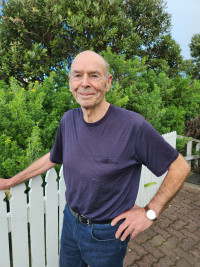 "The guidebook aims is to help people observe, appreciate, and identify some of the amazing landforms New Zealand has to offer. After all, this country is blessed by a huge range of world-class examples in such a small and readily accessible area. The book provides a non-technical scientific narrative that helps readers understand why the landforms look the way they do; the environment that created them and, most importantly, the processes responsible for their formation.This guidebook provides a key to understanding current and past environments; a story of climate change, human impact on the environment, and natural forces that impact our lives in New Zealand."
The Hutton Fund supports research on New Zealand zoology, botany, and geology with grants of $1,000 per application. Two recipients have been selected.
Awarded to Dr Elaine Smid, a Research Fellow at Waipapa Taumata Rau, the University of Auckland, for a project investigating Auckland's hidden network of underground lava flows and the lava tubes they contain.

"By chemically linking lava flows to their source volcanoes, this research will help trace lava pathways beneath the city, providing data for volcanic hazard assessments, land-use planning, and management of culturally significant lava tube features."
Awarded to Noah Finn, of Te Herenga Waka—Victoria University of Wellington, for a project to investigate the bacteria that live with insect and arthropod species in Aotearoa New Zealand.

"My goal is to discover new species of bacteria and investigate their potential to produce novel antibiotics. My work is important as antibiotic-resistant infections are becoming an increasing threat to public health around the world. To date, I have identified and isolated promising bacterial species from native arthropods such as Celatoblatta vulgaris (bush cockroach) and Sidymella angularis (square-ended crab spider). Some of these bacteria produce antibiotics that I am now in the process of isolating, in addition to sequencing the genomes of bacteria themselves. The award will enables me to scale up my DNA sequencing campaign, allowing me to analyse more bacterial genomes for their potential to produce novel antibiotic chemicals, while also expanding our understanding of our country's unique biodiversity."
The Skinner Fund supports the study of the history, art, culture, physical and social anthropology of Māori and Polynesian peoples with grants of $4,000 per application. Two recepients have been selected.
Awarded to Lanae Cable (Ngāti Awa, Tūhoe, Ngāti Pūkeko), of the Kauae Raro Research Collective, to lead project 'The Painted Dead: Ka Pania ngā Kōiwi, Ka Hoki ki te Whenua' examining the use of kōkōwai (red ochre) in Māori mortuary practices across Aotearoa.
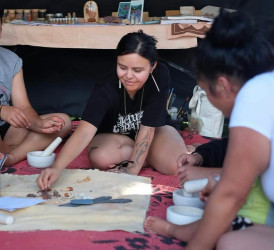
"The project combines archaeological research with Māori practitioner knowledge to better understand the role of kōkōwai in caring for the dead, regional tikanga, and relationships to whenua. Through literature review, wānanga, and engagement with kaumātua and practitioners, the research aims to remember and reconnect with customary burial practices and deepen understanding of kōiwi tangata, kōkōwai, and the relationships between people, ritual, and place."
Awarded to Dr Peter Meihana, of Te Kunenga ki Pūrehuroa – Massey University, examining the return to Wairau (Blenheim) of taonga taken from Te Pokohiwi o Kupe during the mid-20th century, and in particular, how such taonga might be represented in an iwi-led museum.
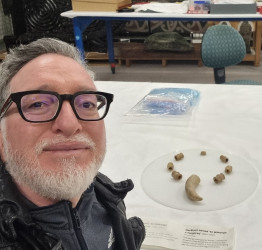
"The project 'From Excavation to Exhibition: Re-centering Rangitāne Authority in the Return and Representation of Wairau Bar Taonga' is another step towards the establishment of a whare taonga in Wairau-Blenheim. The project focuses on Te Pokohiwi o Kupe/Wairau Bar, a wāhi tapu for Rangitāne o Wairau and one of the most important archaeological sites in Aotearoa New Zealand. Many taonga from Wairau Bar have spent decades in museum and institutional collections outside Te Tauihu, the northern South Island. This project considers how those taonga might be returned, cared for, and shared with the public in ways that uphold Rangitāne knowledge, tikanga, and authority. The award will support research in museum and archival collections in Wellington and Christchurch, and help develop an iwi-led exhibition framework for a future whare taonga in Blenheim. At its heart, this project is about reconnecting taonga with people and place, and ensuring that the story of Wairau Bar is told by those who carry the greatest responsibilities to it."