
News
Published 30 July 2026New Companions recognised for leadership and innovation
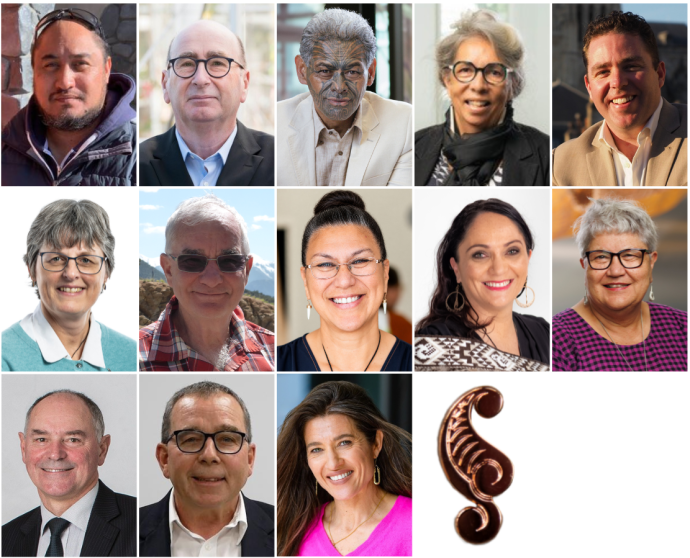
The Council of the Society has elected 13 new Companions – Ngā Takahoa a Te Apārangi – for decades-long contributions to science, technology, or the humanities.
Those being recognised are:
Leon Blake
Dr Bruce Campbell CNZM
Dr Reuben Tūwhakahekeao Collier CNZM
Professor Emeritus Jenny Te Paa-Daniel
Peter Griffin
Dr Gill Jolly
Dr Dave Lowe
Pānia Papa ONZM
Melanie Mark-Shadbolt
Professor Elizabeth McKinley ONZM
Dr Rob Murdoch
Emeritus Professor Ian Town FRACP
Chelsea Winstanley ONZM
Leon Blake (Tūhoe, Tūhourangi, Ngāti Wāhiao, Ngāti Whāwhākia, Ngāti Porou, Ngāti Kahungunu, Taranaki, Te Whānau-a-Apanui) has been elected as a Companion of the Royal Society Te Apārangi for a sustained and eminent contribution to the revitalisation of te reo Māori.
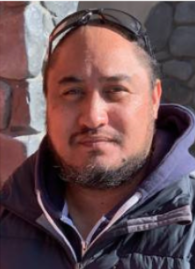
Blake has led and shaped education in te reo Māori for more than two decades. An inaugural scholar at Te Panekiretanga o te Reo (Institute of Excellence in the Māori Language), he taught there for more than a decade.
He founded Te Reo Kairangi, the Master of Māori Language Excellence, at Te Wānanga o Aotearoa and codeveloped national teaching programmes for the Ministry of Education, reaching hundreds of thousands of teachers and learners at every level of language proficiency.
A gifted composer, he has served as a senior kapa haka judge for more than 25 years, and many of his waiata have been performed at Te Matatini, the national kapa haka festival.
As one of the foremost translators in Aotearoa New Zealand, Blake has brought major works of fiction, science, scholarship, and children's literature into te reo Māori.
He has also contributed to national language policy, including advising on Te Ture mō te Reo Māori, the Māori Language Act of 2016.
Dr Bruce Campbell CNZM has been elected as a Companion of the Royal Society Te Apārangi for sustained and outstanding leadership in advancing science and its application.

Trained as an ecologist, Dr Campbell focused his research on understanding changes to environmental systems, then combined this with understanding of global markets and scientific innovation. His career has spanned climate science, governance in the food sector, and public health leadership.
As Chief Operating Officer of Plant & Food Research, he steered the sector's response to the Psa outbreak in the kiwifruit industry, winning his team the Prime Minister's Science Prize in 2017.
Dr Campbell contributed to the International Geosphere–Biosphere Programme and was a lead author of a report for the Intergovernmental Panel on Climate Change.
Through governance roles across a range of industries, including with Horticulture New Zealand and Predator Free 2050, he has advanced approaches that embed scientific evidence, technology, and mātauranga Māori to strengthen decision-making. In 2016 the Society awarded him the Thomson Medal to recognise his scientific leadership.
Dr Reuben Tūwhakahekeao Collier CNZM (Horouta, Mataatua, Te Arawa, Tainui) has been elected as a Companion of the Royal Society Te Apārangi for a sustained and significant contribution to preserving and transmitting Māori knowledge, history, and public memory.
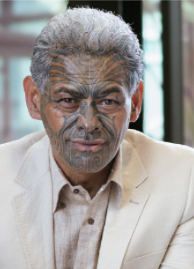
Over more than three decades, Dr Collier has exercised leadership across Māori broadcasting, archival storytelling, war commemoration, governance, and higher education.
As a maker and director of documentaries, he has recorded the oral histories of kaumātua, iwi leaders, and war veterans, producing an enduring archive now held in national and international repositories, including the National Library of New Zealand Te Puna Mātauranga o Aotearoa and Harvard University.
His work in war commemoration, particularly relating to the 28th Māori Battalion, has shaped how New Zealand remembers Māori military service.
As an academic and doctoral supervisor, Dr Collier has advanced innovative research frameworks that are grounded in real-world practice and in kaupapa Māori. The Society awarded him its Pou Aronui Medal in 2025 for outstanding service to the humanities.
Professor Emeritus Jenny Te Paa-Daniel has been elected as a Companion of the Royal Society Te Apārangi for her sustained and significant contribution to theological education and indigenous leadership in Aotearoa New Zealand and internationally.

In 1995, Prof Te Paa-Daniel became the first Māori woman and first non-clergy layperson to lead St John's Theological College, serving as Dean for more than two decades and advancing postgraduate education for under-represented communities.
A globally recognised indigenous theologian, she has published widely on theological education, race politics, gender justice, and Anglican studies, and holds five honorary doctorates from leading seminaries, including Berkeley Divinity School at Yale.
Prof Te Paa-Daniel has provided national and international leadership through the World Council of Churches, the Lambeth Commission, the Anglican Communion's International Peace and Justice Network, and the New Zealand Government’s inaugural Advisory Committee on Women’s Affairs.
From 2018 to 2024 she led the transformation of the National Centre for Peace and Conflict Studies at the University of Otago, Ōtākou Whakaihu Waka.
Peter Griffin has been elected as a Companion of the Royal Society Te Apārangi for an exceptional contribution to science communication in Aotearoa New Zealand.

As founding Director of the Science Media Centre from 2008 to 2018, Griffin built a national organisation that connected scientists with journalists, becoming a trusted source of expert commentary on complex issues from climate change and public health to emerging technologies. He also founded Sciblogs, New Zealand's premier science blogging network.
In 2012 he established the Science Media SAVVY training programme, which has equipped hundreds of researchers with the skills to communicate their work clearly and confidently. Through such initiatives, the Centre created a practical and scalable pathway for scientists to develop as communicators, helping to build a cohort of trusted scientific voices whose value was evident during national crises, including the Canterbury earthquakes and the COVID-19 pandemic.
As a journalist, columnist, and author of The Launch of Rocket Lab (published in 2025), Griffin has demystified science and technology for national audiences for more than 25 years.
Dr Gill Jolly has been elected as a Companion of the Royal Society Te Apārangi for outstanding contributions to science advice, public service, and national resilience in Aotearoa New Zealand.

A volcanologist by training, Dr Jolly has transformed how New Zealand’s Government manages the risk of natural hazards. She provided authoritative science advice to the Prime Minister, Cabinet, and senior officials during major events including the Kaikōura earthquake and the March 2021 tsunami. After the Whakaari (White Island) eruption, she led input from GNS Science into the WorkSafe investigation, and established the CASCADE programme that has shaped practice in national resilience, natural hazard risk, and emergency management across agencies such as National Emergency Management Agency and Toka Tū Ake the Natural Hazards Commission.
Since 2023 she has served as Chief Science Advisor to the Ministry of Business, Innovation and Employment, advising across fields from geothermal energy and artificial intelligence to space weather, and representing New Zealand on the International Expert Advisory Group for AI Safety. A trailblazer for women in science, Dr Jolly is held in the highest esteem, and models a way of leading that strengthens trust in science as a public good.
Dr Dave Lowe has been elected as a Companion of the Royal Society Te Apārangi for his sustained and pioneering contribution to atmospheric science, and his communication on climate change.
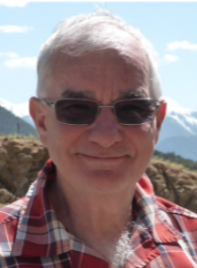
Dr Lowe established the first continuous record of atmospheric carbon dioxide in the Southern Hemisphere, at Baring Head near Wellington in 1972. This work independently confirmed and extended the measurements of atmospheric carbon dioxide captured at Mauna Loa since 1958, which first demonstrated a steady rise in global CO2. He pioneered isotope techniques to identify the sources of methane, a potent greenhouse gas, and investigated how the cycling of greenhouse gases in Earth’s atmosphere can be disrupted by climate change.
Dr Lowe was a lead author for the Intergovernmental Panel on Climate Change, in the year that the Panel was awarded the Nobel Peace Prize.
Beyond research, Dr Lowe has delivered hundreds of public lectures and wrote the award-winning memoir The Alarmist.
Pānia Papa ONZM (Ngāti Korokī-Kahukura, Ngāti Mahuta) has been elected as a Companion of the Royal Society Te Apārangi for a sustained and eminent contribution to the revitalisation of te reo Māori.

One of the country's foremost experts in the Māori language, Papa has transformed education in te reo Māori, co-leading Te Reo Kairangi, the Master of Māori Language Excellence at Te Wānanga o Aotearoa, and helped develop resources such as Te Ara Reo Māori, which has supported more than 60,000 learners nationwide.
She was a founding Trustee for Kotahi Rau Pukapuka Trust, which translated and published 100 books in te reo Māori. Grounded in kaupapa Māori research, her prolific creative work spans more than 40 waiata, 12 translated children's books, and the lullaby anthology Pito Mata. She has written, presented, and produced television shows that normalise te reo Māori in homes.
She has shaped national language policy, contributing to the review of the Māori Language Strategy and the translation of Te Ture mō te Reo Māori, the Māori Language Act of 2016.
Melanie Mark-Shadbolt (Ngāti Porou, Ngāti Kahungunu, Te Ātiawa, Ngāti Raukawa, Te Arawa) has been elected as a Companion of the Royal Society Te Apārangi for a sustained nationally significant contribution at the intersection of indigenous knowledge systems, environmental science, and science policy.

Over two decades as an indigenous environmental advocate, Mark-Shadbolt reshaped how Aotearoa understands and applies mātauranga Māori to biodiversity, biosecurity, emergency management, and climate resilience.
She cofounded and leads Te Tira Whakamātaki, the country's only national pan-Māori environmental and research charity, which created the infrastructure to connect Māori communities, environmental science institutions, and conservation investment.
As Director Māori of the Biological Heritage National Science Challenge, she oversaw a major research programme and helped secure $34 million for responses to kauri dieback and myrtle rust.
She has held senior roles including Deputy Secretary, Māori Rights and Interests, at the Ministry for the Environment, and chairs the Better Border Biosecurity Collaboration Council. Her internationally recognised indigenous biosecurity frameworks and public leadership earned her the 2021 Westpac Women of Influence Public Policy Award.
Professor Elizabeth McKinley ONZM (Ngāti Kahungunu ki Wairarapa, Ngāi Tahu) has been elected as a Companion of the Royal Society Te Apārangi for her sustained and outstanding leadership in Māori and indigenous education.
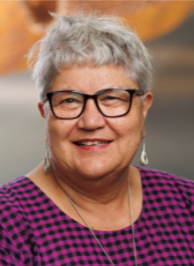
An international authority on science education, curriculum and assessment policy, transformation in schools, and the achievement of Māori and indigenous students, Prof McKinley led the writing of the first national science curriculum in te reo Māori (Pūtaiao, published in 1996) and co-edited the landmark Handbook of Indigenous Education (first published in 2019) a comprehensive reference work on global indigenous education.
She has directed major research programmes, including working with low-decile schools to create pathways into tertiary study for Māori and Pacific students.
Currently Deputy Dean of the Faculty of Education at the University of Melbourne, she also directed a US$55 million programme to develop Indigenous leadership across Australia, Aotearoa, and the Pacific.
She is Chair of the international Indigenous Science Network.
Dr Rob Murdoch has been elected as a Companion of the Royal Society Te Apārangi for his outstanding and sustained contribution to marine and environmental science and science leadership over more than four decades.
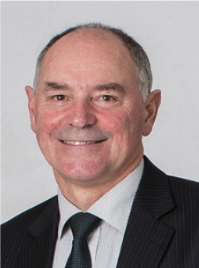
Trained as a biological oceanographer, Dr Murdoch’s early research illuminated how ocean circulation affects the distribution of zooplankton. His discovery of hoki spawning in Cook Strait helped establish a major fishery. He was part of the team that won the 2011 Prime Minister's Science Prize for research on how the ocean influences climate.
As a senior leader at New Zealand’s National Institute of Water and Atmospheric Research for 27 years, he shaped the organisation's scientific direction and oversaw investment in critical assets including the upgrade of the Tangaroa research vessel and two supercomputers.
Dr Murdoch helped to establish two National Science Challenges and advised the government as a Departmental Science Advisor at the Ministry of Business, Innovation and Employment. The Society awarded him the Thomson Medal for science leadership in 2014.
Emeritus Professor Ian Town has been elected as a Companion of the Royal Society Te Apārangi for his outstanding leadership and sustained contributions over three decades at the interface of science, health research, tertiary education, and public policy.

Early in his career as a respiratory clinician–scientist, he led one of New Zealand's most productive research groups, published over 100 papers, and shaped clinical guidelines for asthma and chronic obstructive pulmonary disease across Australasia.
As Deputy Vice-Chancellor and Acting Vice-Chancellor of Te Whare Wānanga o Waitaha | the University of Canterbury, he guided the institution through the Canterbury earthquakes, securing a $260 million Crown investment to rebuild its science and engineering facilities. He also championed national research assets, including high-performance computing and the Christchurch health precinct, Te Papa Hauora.
As Chief Science Advisor to the Ministry of Health from 2019, Prof Town provided trusted, evidence-based advice to Ministers and officials throughout the COVID-19 pandemic, including on the national vaccination programme. He continues to serve the wider health sector as a member of the Ministry’s Strategy and Policy Group.
Chelsea Winstanley ONZM (Ngāti Ranginui, Ngāi Te Rangi) has been elected as a Companion of the Royal Society Te Apārangi for sustained and outstanding leadership in film-making and cinematography for Māori and for New Zealand.
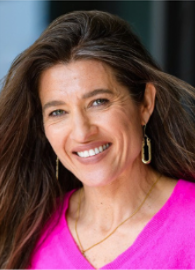
Over more than two decades, Winstanley has championed Māori sovereignty, indigenous knowledge, and leadership by wāhine Māori in the film industry – within Aotearoa New Zealand and globally.
As a producer of Jojo Rabbit (released in 2019), she became the first indigenous woman nominated for an Academy Award for Best Picture, opening pathways for Indigenous producers worldwide.
As a cofounder of Matewa Media, she pioneered production of te reo Māori versions of major films, including Moana, The Lion King, and Frozen, normalising te reo Māori in mainstream cinema and strengthening intergenerational language transmission.
Through documentaries such as Merata: How Mum Decolonised the Screen and TOITŪ: Visual Sovereignty, and by mentoring emerging Indigenous filmmakers, she has advanced Māori intellectual and creative traditions and created enduring platforms for Māori storytelling.
These new Companions will be formally inducted at a ceremony in Wellington on 7 October 2026.