
News
Published 2 April 2026Latest cohort of Ngā Ahurei Fellows announced
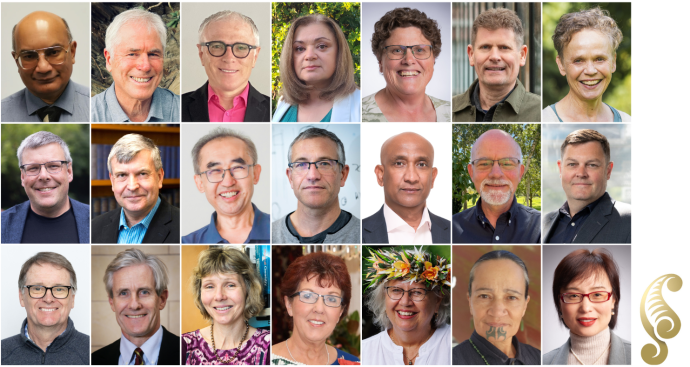
Twenty-one new Ngā Ahurei Fellows have been elected to the Academy of the Royal Society Te Apārangi, including one Honorary Fellow. Fellowship recognises researchers, scholars, and innovators throughout Aotearoa New Zealand who have achieved excellence in their various disciplines across science, technology, and the humanities.
The new Fellows are:
Rohan Ameratunga: Elected for pioneering discoveries on genetic disorders of the immune system
Tim Anderson: Elected for clinical research in neurology and movement disorders
Michael Baker: Elected for outstanding contributions to epidemiology and public health
Natalia Chaban: Elected for innovation in international relations, political communication, and public diplomacy
Averil Coxhead: Elected for contributions to learning and teaching specialised vocabulary and languages
John A Crump: Elected for breakthroughs in management of non-malaria fever and sepsis in tropical regions
Cecile de Klein: Elected for generating specific knowledge on New Zealand’s agricultural greenhouse gases for better environmental management
Peter Dearden: Elected for significant research contributions to evolutionary development biology
Craig Elliffe: Elected for research on complex international taxation issues
Aiguo Patrick Hu: Elected for leadership in wireless power transfer and advanced power electronics
Eric Le Ru: Elected for making fundamental discoveries in how light interacts with nanoparticles
Udaya Madawala: Elected for pioneering research and utilisation of bidirectional wireless power flow
Paul Millar: Elected for contributions to literary scholarship and for pioneering the field of digital humanities
James Murphy: Elected as an Honorary Fellow for foundational research for new drugs for cancer and inflammation using ‘pseudokinases’
Andy Nicol: Elected for expertise on tectonic faults and geohazards
Andy Philpott: Elected for leading research in the field of optimisation in electricity markets and other industries
Kim Pickering: Elected for being a world leader in creating sustainable materials
Dame Alison Stewart: Elected for a lifetime commitment to the control of plant diseases using the beneficial fungus Trichoderma
Yvonne Underhill-Sem: Elected for intellectual leadership on gendered social relations and development studies in the Pacific
Waikaremoana Waitoki: Elected for indigenising psychology
Bing Xue: Elected for outstanding contributions to the field of artificial intelligence
Being made a Fellow is an honour that recognises distinction in research, scholarship, or the advancement of knowledge at the highest international standards. Fellows can use the post-nominal ‘FRSNZ’ after their name to indicate this honour.
The new Fellows were formally inducted at an event in Whanganui-a-Tara Wellington on 30 April 2026.
View photo album from the day.
These Fellows are the 2025 cohort, announced in 2026.
Read more about the new Fellows:
Professor Rohan Ameratunga, Auckland Hospital
Elected for pioneering discoveries on genetic disorders of the immune system
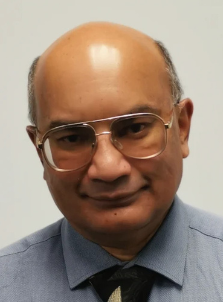 Professor Rohan Ameratunga ONZM FRCP FRCPCH FRCPATH FRACP FRCPA is an outstanding clinical scientist and paediatric and adult immunologist who has specialised in primary immunodeficiencies, which are rare genetic disorders that impair the immune system from birth and make it hard for the body to fight infections. He has identified several new immune disorders, demonstrated how their course can vary in different patients, and developed diagnostic criteria which are now used internationally. He established the world’s first customised genetic testing service for primary immunodeficiency, a de facto national paediatric immunology service, and an adult immunology service in Auckland to improve patient care in Aotearoa New Zealand.
Professor Tim Anderson, Ōtākou Whakaihu Waka – University of Otago, Christchurch
Elected for clinical research in neurology and movement disorders
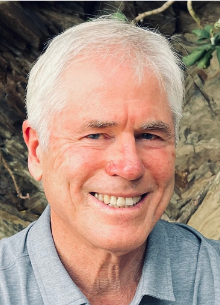 Professor Tim Anderson FRACP is a neurologist–scientist with an international reputation for his achievements in the field of movement disorders, particularly Parkinson’s disease. His clinical research has encompassed patients affected by other neurodegenerative disorders, such as Alzheimer’s and Huntington’s diseases, disabling neuropsychiatric complications, and traumatic brain injury. His discoveries range from analysis of speech and swallowing impairments to tracking eye movements for diagnosis and management. Clinical Director at the New Zealand Brain Research Institute for 15 years, he co-leads a groundbreaking international longitudinal cohort study of Parkinson’s patients that is helping to establish biomarkers of cognitive decline.
Professor Michael Baker, Ōtākou Whakaihu Waka – University of Otago, Wellington
Elected for outstanding contributions to epidemiology and public health
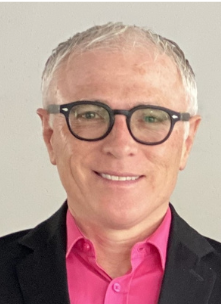 In an applied research career spanning 35 years, Professor Michael Baker MNZM FAFPHM FNZCPHM has advanced the field of epidemiology, control, and prevention of infectious diseases. His work has provided an empirical base for quantifying the impact of infectious diseases, identifying modifiable risk factors, implementing interventions, and evaluating their impact. A common theme has been protecting the public from avoidable infections, and reducing ethnic and socioeconomic inequities, whether for food-borne campylobacteriosis, rheumatic fever and heart disease, or the global Covid-19 pandemic. As well as generating a robust evidence-base, he has promoted translation of knowledge into policy and practice through prolific publication and highly effective science communication.
Professor Natalia Chaban, Te Whare Wānanga O Waitaha – University of Canterbury
Elected for innovation in international relations, political communication, and public diplomacy
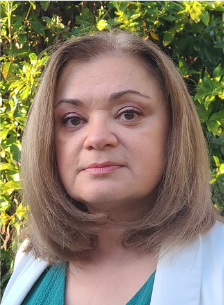 Professor Natalia Chaban is an expert on political communication in international relations and public diplomacy. She is regarded as a founding expert among researchers who have systematically studied global perceptions of the European Union and narratives about its foreign policy, challenging its Eurocentric understanding. She codeveloped theorisation of the ‘perceptual approach’ to foreign policy, which has advanced understanding of the role of perceptions in international relations, diplomacy, and foreign policy formulation. Her interdisciplinary background in international strategic communication informs her research, including her recent work to apply critical scholarship to understanding the war against Ukraine. Her analyses of crisis, youth, cultural, and heritage aspects of public diplomacy, have been taken up by policymakers, civil society, and diplomats.
Professor Averil Coxhead, Te Herenga Waka – Victoria University of Wellington
Elected for contributions to learning and teaching specialised vocabulary and languages
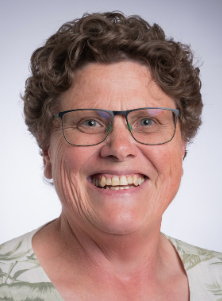 Professor Averil Coxhead’s research translates approaches for language acquisition into different real-world contexts. By studying the vocabulary and grammar needed to succeed in academic study – or specialised professional fields such as trades, aviation, or rugby refereeing – she has been able to support learners with practical tools such as comprehensive word lists and textbooks. Her multilingual research includes work in Danish, Tongan, Chinese, and Samoan. She has collaborated on highly successful online tools to test language and assess knowledge of vocabulary. Her work has informed applied linguistics, teacher education, and language teaching.
Professor John A Crump, Ōtākou Whakaihu Waka – University of Otago
Elected for breakthroughs in management of non-malaria fever and sepsis in tropical regions
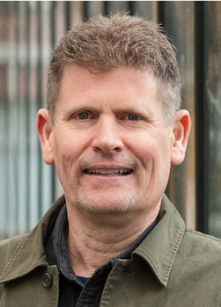 Professor John A Crump FRCP FRACP FRCPA is a world authority on the epidemiology, diagnosis, prevention, and management of non-malaria fever and sepsis. He has used new tools to address key hypotheses on bacterial and viral causes of a range of overlooked causes of fever, unmasking overdiagnosis of malaria. His work has catalysed landmark changes in public health policy and has spurred development and deployment of vaccines for typhoid, paratyphoid fever, and nontyphoidal Salmonella invasive disease. He is committed to supporting responsible global health partnerships and training of researchers from under-resourced countries.
Dr Cecile de Klein, Maiangi Taiao – Bioeconomy Science Institute
Elected for generating specific knowledge on New Zealand’s agricultural greenhouse gases for better environmental management.
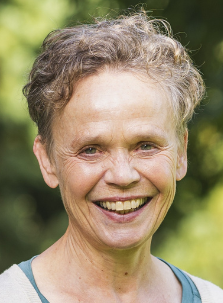 Dr Cecile de Klein FNZSSS is a leading soil and environmental scientist whose work has advanced understanding of nitrogen cycling and nitrous-oxide emissions in pastoral agricultural systems. Her research has revealed animal, soil, and plant solutions for reducing greenhouse gas emissions from grazed livestock systems under New Zealand’s unique conditions. She has developed accurate emission factors for agricultural greenhouse gases, specific to New Zealand. This research replaced generic global estimates with field-validated measurements, leading to significant revision of the country’s nitrous-oxide inventory. These improved metrics strengthen the scientific basis for New Zealand’s national greenhouse-gas reporting and informed policy decisions, ensuring that climate targets and regulatory frameworks reflect real agricultural conditions.
Professor Peter Dearden, Ōtākou Whakaihu Waka – University of Otago
Elected for significant research contributions to evolutionary development biology
 Professor Peter Dearden is a geneticist and expert in evolutionary developmental biology. He has led multiple international genome initiatives, including analysing the genomes of every living kākāpō to support conservation. His work on bees has been economically important for the beekeeping industry. His most recent programme investigates gene-drive technologies to control invasive wasps, enabling Aotearoa New Zealand to make decisions about the use of these tools in pest management that are scientifically robust and ethically informed. As the Founding Director of Genomics Aotearoa, Peter played a pivotal role in building the nation’s genomic and genetics research capability. Committed to public engagement, he created ‘Lab-in-a-Box' (a shipping container transformed into a mobile laboratory) which has brought hands-on molecular biology to schools and communities across New Zealand and the Pacific.
Professor Craig Elliffe, Waipapa Taumata Rau – University of Auckland
Elected for research on complex international taxation issues
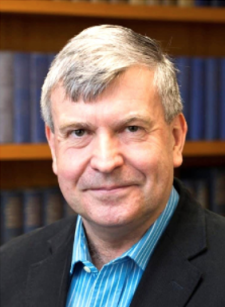 Professor Craig Elliffe is a global leader in international taxation law. His most recent works addressed widespread public and government concern about the light tax burden on companies operating in the digital economy. Ensuring that multinationals pay appropriate levels of tax when doing business in Aotearoa New Zealand will contribute significantly to the future wellbeing of every citizen. Craig’s research illuminates the challenges embedded in the international tax system and identifies ways to remedy them through international and domestic reform. His work is frequently cited in New Zealand courts and has helped guide Government tax policy through working groups. He is an acknowledged expert in tax treaty interpretation and the first New Zealander to serve on the Permanent Scientific Committee of the International Fiscal Association and as a General Reporter to its Congress.
Professor Aiguo Patrick Hu, Waipapa Taumata Rau – University of Auckland
Elected for leadership in wireless power transfer and advanced power electronics.
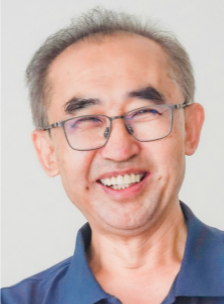 Professor Aiguo Patrick Hu is an internationally recognised leader in wireless power transfer – a technology that enables power delivery without electrical contacts. His research focuses on developing innovative power conversion and control methods to enable safe, efficient, and cost-effective wireless power supply. His work connects deep theoretical understanding with practical engineering solutions. Patrick’s pioneering breakthroughs – the autonomous push-pull resonant converter and a novel resonant detection method – have generated significant intellectual property and have been adopted by industry for implantable medical devices, consumer electronics, and industrial equipment, such as wireless charging systems for wind turbines and mobile phones.
Professor Eric Le Ru, Te Herenga Waka – Victoria University of Wellington
Elected for making fundamental discoveries in how light interacts with nanoparticles
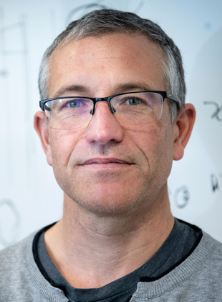 Professor Eric Le Ru is a physicist who specialises in nano-photonics and plasmonics. He has made fundamental discoveries that have revolutionised understanding of how light interacts with nanoparticles and helped transform the way scientists study molecular interactions and materials at the nanoscale. His advances have enabled individual molecules to be detected and analysed using Raman spectroscopy – an outcome previously considered impossible. Eric codeveloped the bi-analyte SERS technique, which is now considered the gold standard to prove single-molecule sensitivity. His theoretical framework allows for the enhancement effects in Raman spectroscopy to be quantified. Eric’s lab work was translated to the cofounding of Marama Labs, a company that develops advanced scientific instruments for industrial applications.
Professor Udaya Madawala, Waipapa Taumata Rau – University of Auckland
Elected for pioneering research and utilisation of bidirectional wireless power flow
 Professor Udaya Madawala FIEEE (USA) has made innovative contributions to bidirectional wireless power transfer technology. Previously, technology for wireless power transfer enabled only one-way flow of electrical energy. His research has advanced the field to enable two-way flow, enabling seamless electrical energy exchange among multiple devices without physical connections. This breakthrough underpins emerging applications for wireless energy transfer, including phone-to-phone, vehicle-to-grid, and vehicle-to-building charging. Udaya’s contributions have spanned theoretical development, design, implementation, licensing, and partnering with global industry – covering all facets of the research-to-impact chain.
Professor Paul Millar, Te Whare Wānanga O Waitaha – University of Canterbury
Elected contributions to literary scholarship and for pioneering the field of digital humanities
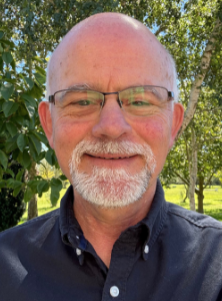 Professor Paul Millar is a pioneer of digital humanities research in New Zealand. His primary expertise is in New Zealand literature, and he has authored major studies on the work of poet James K Baxter and novelist Bill Pearson. In the field of digital humanities, he has researched text digitisation, promoted the teaching of skills in digital humanities, and established nationally significant archives, including the New Zealand Electronic Text Centre and the CEISMIC Canterbury Earthquake Digital Archive. He also established the University of Canterbury’s Arts Digital Lab, championed post-disaster humanities research, and served as President of the Australasian Association for Digital Humanities.
Professor James Murphy, The Walter and Eliza Hall Institute of Medical Research
Elected as an Honorary Fellow for foundational research for new drugs for cancer and inflammation using ‘pseudokinases’
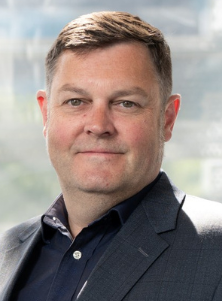 Professor James Murphy has gained international recognition for his biochemical studies of protein kinases and pseudokinases. Kinases and pseudokinases are enzymes that regulate cell function, and help cells send signals to each other. He has opened new research areas in molecular biology and laid the foundations for innovative therapeutic strategies for inflammatory diseases and cancers. James built systems to study about 150 lesser-known kinases and pseudokinases. One of these was found to play a key role in a process where damaged or infected cells die in a controlled way – necroptosis – which is linked to inflammation, and contributes to diseases including inflammatory bowel disease. His work has led to two companies that are now developing drugs for inflammation and cancer, currently pending progression to clinical trials.
Professor Andy Nicol, Te Whare Wānanga O Waitaha – University of Canterbury
Elected for expertise on tectonic faults and geohazards
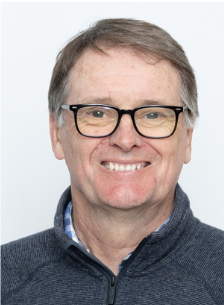 Professor Andy Nicol is a geologist and internationally recognised expert in tectonic faults and geohazards. He has used data from Aotearoa New Zealand, supported by sites across the world, to research the geometry, scaling relationships, displacement rates, interactions, and growth of active faults. He has also studied the New Zealand plate boundary over long timeframes. Much of Andy’s research is important to hazard assessment in New Zealand. He has shaped the understanding of the 2016 M7.8 Kaikōura earthquake and contributed to two editions of the National Seismic Hazard Model. Outside of tectonics, Andy has applied his expertise to carbon dioxide and hydrogen storage along with exploration for natural hydrogen.
Professor Andy Philpott, Waipapa Taumata Rau – University of Auckland
Elected for leading research in the field of optimisation in electricity markets and other industries
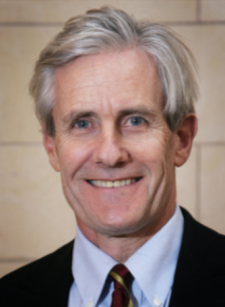 Professor Andy Philpott, INFORMS Fellow, is an engineer whose theoretical and practical development of techniques and models for ‘stochastic optimisation’ – a framework for solving optimisation problems where the parameters are random – has been used to decarbonise and cheapen electricity in several countries. Andy’s techniques are particularly important to the electricity industry, where there is unavoidable uncertainty in the demand for electricity. Andy’s techniques have saved energy companies and consumers money by helping companies make better operational and capital planning decisions. Currently, his work in electricity market modelling is applied in New Zealand, Chile, Brazil, France, and Canada. His techniques have also been used for route planning in yacht racing, the pulp and paper industry, and the rollout of broadband in Aotearoa New Zealand.
Professor Kim Pickering, Te Whare Wānanga o Waikato – University of Waikato
Elected for being a world leader in creating sustainable materials
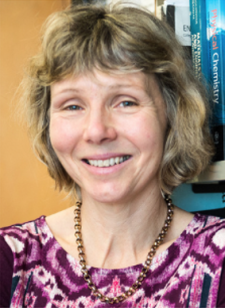 Professor Kim Pickering FENZ is an engineer and world leader in the development of advanced composite materials, made from bioderived, recyclable, and biodegradable resources. Her research has advanced understanding of natural plant-based fibre-reinforced polymers, enabling safer, stronger, and more environmentally friendly composite materials. Kim has developed novel recyclable thermoplastics from corn gluten meal and patented high-performance thermoset resin, made from biofuel production waste for use in products such as baths and kayaks. Kim’s extensive journal publications, six patents, and consultancies have influenced industry, and have led to the materials used to manufacture the boat for the Earthrace biodiesel challenge, and renewable 3D printing filament.
Emeritus Distinguished Professor Dame Alison Stewart, Lincoln University
Elected for a lifetime commitment to the control of plant diseases using the beneficial fungus Trichoderma
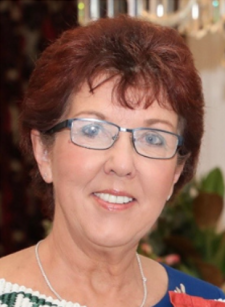 Emeritus Distinguished Professor Dame Alison Stewart DNZM FNZIAHS FAPPS is an internationally recognised plant pathologist who is an expert in the control of plant diseases using beneficial micro-organisms. Her research has focused on using Trichoderma, a soil fungus. Early in her career, Alison developed effective control strategies for economically important diseases of onions. Concerned with heavy use of agrichemicals in New Zealand, she then focused her research on developing biological solutions. Alison created a unique collection of fungal strains that enabled quick and effective identification of bioactivity, leading to the development of several Trichoderma based biofungicides. In 1998, Alison became the first woman to be promoted to professor at Lincoln University. Her research has underpinned commercialisation of six biobased products in New Zealand and the United States of America.
Professor Yvonne Underhill-Sem, Waipapa Taumata Rau – University of Auckland
Elected for intellectual leadership on gendered social relations and development studies in the Pacific
 Professor Yvonne Te Ruki Rangi o Tangaroa Underhill-Sem MNZM DNZG FPAS is a Pacific studies and geography scholar of Cook Islands, Niuean, and Pākehā descent. Based on Pacific research, she has been instrumental in establishing Pacific feminist development geography as a critical field in social sciences. Yvonne has transformed scholarly understandings of the gendered nature of the diverse connections of people and place and has dedicated her career to advancing fairer, more inclusive spaces. She has drawn sustained attention to how practices and narratives of sexism, racism, colonisation, and economic inequality continue to shape Pacific communities. Her work has significantly deepened understanding of gender relations, embodiment, indigeneity, and coloniality across the Pacific, including in Aotearoa New Zealand. She is also attuned to the daily realities of Pacific communities and recently co-led a seven-country study examining the impacts of climate change on the mobility of Pacific people.
Professor Waikaremoana Waitoki, Te Whare Wānanga o Waikato – University of Waikato
Elected for indigenising psychology
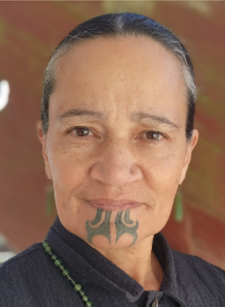 Professor Professor Waikaremoana Waitoki FNZPsS (Ngāti Hako, Ngāti Mahanga) is a clinical psychologist and an internationally recognised Indigenous leader in psychology. Waikaremoana’s expertise spans mātauranga Māori, hauora, Māori wellbeing, and the social determinants of health. Her research indigenises psychology and seeks to dismantle systemic racism. She has generated new knowledge to decolonise psychology, advance Indigenous knowledge systems and address systemic inequities in health and education. Her projects have promoted maternal wellbeing using mātauranga Māori, and she was the Science Lead for research programme Working to End Racial Oppression, which has examined the entanglement of racism across employment, housing institutions, and inter-ethnic relationships.
Professor Bing Xue, Te Herenga Waka – Victoria University of Wellington
Elected for outstanding contributions to the field of artificial intelligence
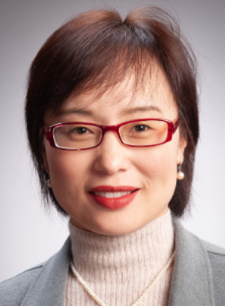 Professor Bing Xue FIEEE FEngNZ is a computer scientist and expert in artificial intelligence. She was the first Professor of AI and first female Professor in the Engineering Faculty at Te Herenga Waka – Victoria University of Wellington. She is an international leader of evolutionary machine learning. She automated design of deep neural networks and developed novel algorithms for feature selection. Her work on evolutionary image analysis changed the traditional ways of addressing machine-learning tasks. She has successfully applied these advances to primary industry, climate change, health, and biomedical applications. Bing codeveloped New Zealand’s first undergraduate and postgraduate programmes for AI, and contributed significantly to diversity and inclusion in information and communications technology, science, and engineering.